



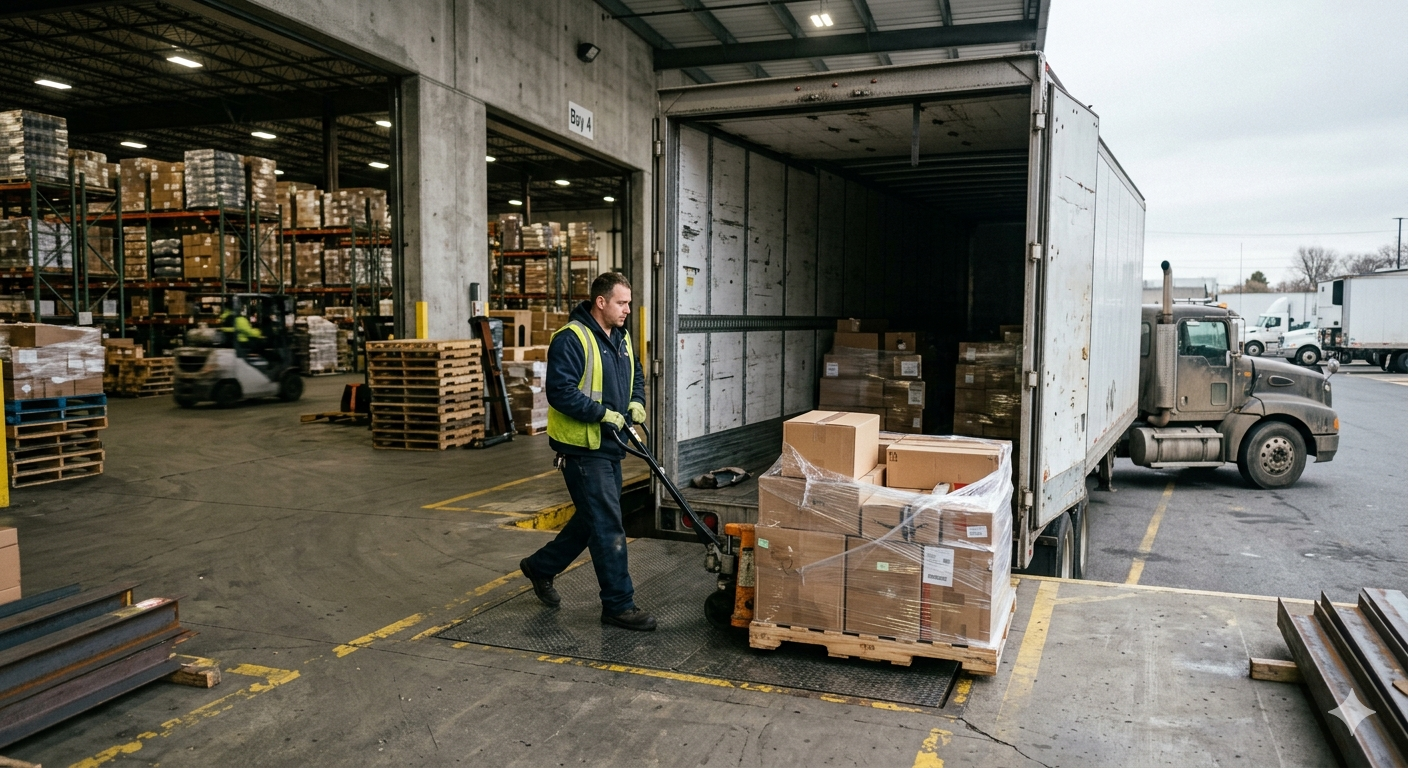
You are a shipper in New Jersey and you just got hit with an LTL invoice that is way higher than you expected. Sound familiar?
Unpredictable LTL rates are one of the biggest headaches for businesses moving freight from NJ to cities like Chicago, Atlanta, or Los Angeles. You book a shipment, think you know what it is going to cost, and then the final bill looks nothing like the quote. It happens constantly, and it costs businesses real money.
In this guide, S&S Brokerage Inc. breaks down exactly what drives LTL shipping rates from New Jersey in 2026, what those rates actually look like for major U.S. destinations, and how to stop overpaying on every shipment.
Whether you are a manufacturer shipping pallets to the Midwest, an Amazon seller distributing inventory to fulfillment centers, or an importer sending goods across the country, this guide gives you the information you need to make smarter freight decisions.
What Is LTL Shipping and How Do LTL Rates Work?
LTL stands for Less Than Truckload. It is a shipping method used when your freight does not fill an entire trailer. Instead of paying for the full truck, you share space with other shippers, and you pay only for the portion of the trailer your freight occupies. This makes LTL ideal for businesses that regularly ship between 150 and 15,000 pounds. It is more affordable than booking a dedicated full truckload, but more structured and reliable than parcel shipping.
LTL shipping rates from New Jersey are calculated using a combination of several variables. These are not fixed like postage stamps. They shift based on your freight details, the carrier, the lane, and market conditions. Here is what actually determines your rate:
- Freight weight and dimensions
- Freight class (NMFC classification)
- Origin and destination ZIP codes
- Distance and lane density
- Fuel surcharges
- Accessorial charges (liftgate, residential delivery, inside delivery, etc.)
- Carrier capacity and seasonal demand
Understanding each of these components is the difference between getting a fair rate and getting overcharged every time you ship.
Why LTL Shipping Rates from New Jersey Matter for Your Business
New Jersey is one of the most strategically positioned shipping hubs in the United States. Located in the heart of the Northeast corridor, NJ has direct access to major ports, rail lines, and highway networks that connect to every region of the country.
For businesses operating out of NJ, this geography is a major advantage. You can reach New York City in under two hours. You can hit Philadelphia, Baltimore, and Washington DC in a single day. You can push freight to Chicago, Atlanta, or Dallas within two to four days.
But geography alone does not guarantee good rates. The Northeast is one of the busiest and most expensive freight regions in the country. Carrier capacity is tighter here, fuel costs are higher, and urban delivery surcharges are common.
If you are shipping LTL freight from New Jersey without a solid understanding of how rates are structured, or without a broker who can negotiate on your behalf, you are almost certainly leaving money on the table.
2026 LTL Shipping Rates from New Jersey: City-by-City Breakdown
The rates below are based on typical market pricing for 2026 and reflect a standard pallet shipment of approximately 500 pounds at a common freight class. Actual rates will vary based on your specific freight dimensions, class, and any additional service requirements.
Use this as a starting benchmark when evaluating quotes.
| Destination | Approx. Distance | Est. LTL Rate (per cwt) | Transit Time |
| NJ to New York City, NY | ~90 miles | $45 – $85 | 1 day |
| NJ to Philadelphia, PA | ~100 miles | $50 – $90 | 1 day |
| NJ to Boston, MA | ~230 miles | $65 – $120 | 1-2 days |
| NJ to Washington, DC | ~240 miles | $65 – $115 | 1-2 days |
| NJ to Charlotte, NC | ~630 miles | $90 – $160 | 2-3 days |
| NJ to Atlanta, GA | ~860 miles | $110 – $190 | 2-3 days |
| NJ to Chicago, IL | ~790 miles | $105 – $185 | 2-3 days |
| NJ to Dallas, TX | ~1,500 miles | $145 – $230 | 3-4 days |
| NJ to Denver, CO | ~1,770 miles | $160 – $250 | 3-5 days |
| NJ to Los Angeles, CA | ~2,800 miles | $195 – $310 | 4-6 days |
| NJ to Seattle, WA | ~2,900 miles | $200 – $320 | 4-6 days |
| NJ to Miami, FL | ~1,280 miles | $135 – $215 | 2-4 days |
Note: Rates shown are approximate ranges based on 2026 market conditions. Always request a current quote for your specific shipment.
Key Factors That Drive LTL Freight Costs in New Jersey
1. Freight Class
Freight class is one of the most misunderstood and costly variables in LTL pricing. The National Motor Freight Classification system groups commodities into 18 classes ranging from class 50 to class 500. The higher the class, the more expensive it is to ship.
Freight class is determined by four factors: density, stowability, handling, and liability. A shipment of heavy steel parts might fall into class 50 and ship cheaply. A shipment of light foam products might hit class 150 or 200, driving the rate way up.
Many shippers accidentally misclassify their freight, which results in either overpayment or a reclassification penalty from the carrier after delivery. Working with an experienced broker helps you get this right the first time.
2. Distance and Lane Congestion
LTL freight cost per mile in NJ varies significantly by lane. Short regional hauls like NJ to NYC or NJ to Philadelphia are high volume and competitive, which often keeps rates reasonable. Longer hauls to the South or West Coast cross multiple carrier territories and involve terminal transfers, which adds cost.
Lanes that are heavily traveled in one direction but lightly traveled in the other create imbalances. Carriers charge more to move freight in the direction where they have fewer loads, because empty return miles are expensive. Your broker should know which lanes are favorable and which are not.
3. Fuel Surcharges
Fuel surcharges are applied on top of the base rate and are updated weekly by most carriers based on the Department of Energy fuel index. In 2026, fuel surcharges in the Northeast typically range from 8 percent to 20 percent of the base rate.
If you are not accounting for fuel surcharges when budgeting freight costs, your actuals will almost always run higher than expected.
4. Accessorial Charges
Accessorials are additional services that carriers charge for beyond basic pickup and delivery. They are also the biggest source of invoice surprises for shippers. Common accessorial charges in NJ LTL shipments include:
- Liftgate pickup or delivery: $75 to $150
- Residential delivery: $75 to $150
- Inside delivery: $50 to $200
- Limited access delivery (schools, churches, construction sites): $75 to $200
- Detention or driver wait time: $50 to $150 per hour
- Redelivery charges if no one is available to receive the shipment
These charges can add hundreds of dollars to a single shipment if you are not prepared. Always disclose your delivery location details upfront.
5. Dimensional Weight and Density
Carriers have shifted toward density-based pricing in recent years. If your shipment is large but light, you may be charged based on the space it occupies rather than its actual weight. This catches many shippers off guard, especially those shipping large but lightweight products like furniture, electronics, or packaging materials.
Optimizing how you stack and palletize your freight can reduce the dimensional footprint and bring costs down meaningfully.
| Cost Factor | Typical Impact on LTL Rate | How to Minimize |
| Fuel Surcharge | 8% to 20% of base rate | Lock in rates with a broker |
| Freight Class | Can shift rate by 30%+ | Classify cargo correctly |
| Accessorials | $50 to $300+ per shipment | Prepare delivery site in advance |
| Dimensional Weight | Varies significantly | Optimize pallet stacking |
| Residential Delivery | $75 to $150 extra | Use commercial address if possible |
Common Problems NJ Shippers Face and How to Solve Them
Problem 1: Rate Quotes That Do Not Match the Final Invoice
This is the most common complaint in LTL shipping. You get a quote, book the shipment, and then receive an invoice with additional charges you did not expect.
The fix: Be as specific as possible when requesting quotes. Include exact weight, dimensions, freight class, pickup and delivery requirements, and any site access limitations. The more accurate your input, the closer your quote will be to your final bill.
Problem 2: Freight Getting Damaged in Transit
LTL shipments are handled multiple times at different terminals before they reach their destination. This makes them more vulnerable to damage than FTL shipments.
The fix: Palletize your freight securely, use appropriate packaging for the freight class, and consider freight insurance for high-value shipments. A good broker will advise you on carrier-specific handling reputations for certain lanes.
Problem 3: Transit Delays on Key Routes
LTL transit times are estimates, not guarantees. Unexpected volume surges, weather events, or carrier terminal backups can delay your freight.
The fix: Build buffer time into your supply chain for LTL shipments. If you have time-sensitive freight, ask about guaranteed delivery options or consider expedited LTL services.
Problem 4: Overpaying Because You Are Not Comparing Carriers
Many businesses stick with one carrier out of habit and never realize there are better options available. LTL carrier pricing varies widely for the same lane, and rates can differ by 20 to 40 percent between carriers for identical shipments.
The fix: Work with a freight broker who has relationships with multiple carriers and can shop your load across several options. This is exactly what S&S Brokerage does for every client.
Real-World Scenario: NJ to NYC LTL Freight
Let us walk through a real example so you can see how this all comes together.
A New Jersey-based furniture distributor needs to ship four pallets of assembled shelving units from their warehouse in Edison, NJ to a retail client in Brooklyn, NY. The total weight is 1,200 pounds. The freight is classified as class 125 due to the size and stowability of the items.
Here is how the cost breaks down:
- Base LTL rate for the lane (NJ to NYC, ~90 miles, class 125): $210
- Fuel surcharge (12%): $25
- Liftgate delivery (retail location in Brooklyn): $110
- Residential area surcharge: $75
Total estimated invoice: $420
Without knowing about the liftgate and residential surcharges upfront, the shipper might have budgeted only $250 based on the base rate alone. That is a 68 percent gap between expectation and reality.
When this distributor started working with S&S Brokerage, they provided full delivery details on every shipment. The team at S&S flagged the accessories before booking, found a carrier with better NYC metro rates, and reduced their average NJ to NYC shipping costs by 22 percent over three months.
That is the difference a knowledgeable logistics partner makes.
Why Choose S&S Brokerage Inc. for LTL Shipping from New Jersey
S&S Brokerage Inc. is a New Jersey-based freight brokerage with over 20 years of combined industry experience. The company operates across 48 states, giving clients access to a wide carrier network that covers regional lanes, long hauls, and everything in between.
Here is what makes S&S Brokerage a reliable logistics partner for NJ shippers:
Carrier Relationships Across the Country
S&S works with a vetted network of LTL carriers, which means they can compare rates across multiple options for every shipment. You are not locked into one carrier’s pricing or service level.
Real-Time Coordination
The team at S&S provides real-time shipment coordination and dedicated customer service. If there is a delay, a reclassification, or a delivery issue, you have a person to call who knows your account, not a call center.
Transparent Pricing
S&S Brokerage believes in giving clients accurate, all-in quotes from the start. No hidden fees. No surprise invoices. Just clear communication at every step.
Safety and Compliance
S&S maintains a strong commitment to carrier vetting, safety standards, and compliance. Every carrier in the network is screened before being used for client shipments.
Experience with Diverse Freight Types
From palletized consumer goods to industrial equipment, S&S has experience handling a wide range of freight types. Whether you are an Amazon seller managing FBA inventory, an importer distributing goods nationally, or a manufacturer shipping bulk orders, the team understands your operational needs.
Actionable Tips to Reduce Your LTL Shipping Costs from NJ
These are practical steps you can take today to lower your LTL freight bills:
- Classify your freight correctly. Incorrect freight class is one of the most common causes of unexpected charges. If you are not sure how to classify a product, ask your broker before booking.
- Consolidate shipments when possible. If you are making multiple LTL shipments to the same destination each week, consolidating them into one may reduce your per-shipment cost significantly.
- Optimize your pallet dimensions. Reduce pallet height and stack efficiently to minimize the dimensional weight and cubic space of your shipment.
- Disclose all delivery requirements upfront. If the delivery location needs a liftgate, has limited access, or involves a residential address, say so at booking. Last-minute changes cost more.
- Ship during off-peak periods when possible. The weeks before major holidays, especially Q4, are high-demand periods where rates spike. Shipping mid-month on weekdays typically gives you better pricing.
- Use an LTL rate calculator or broker to compare options. Never accept the first quote you receive. An experienced broker like S&S Brokerage can compare multiple carriers and identify the best value for your lane.
- Track your freight data over time. Understanding your shipping patterns, volumes, and cost trends helps you negotiate better rates and plan more efficiently.
Conclusion: Take Control of Your LTL Shipping Costs in 2026
LTL shipping rates from New Jersey do not have to be a mystery. Once you understand how they are calculated, what factors push them up, and how to work with the right logistics partner, you can bring your freight costs under control and keep them there.
In 2026, the shippers who come out ahead are the ones who ask the right questions, prepare their shipments correctly, and partner with people who know the freight market. S&S Brokerage Inc. has spent years building carrier relationships and operational knowledge to help NJ businesses do exactly that.
Whether you are sending one pallet to Brooklyn or a dozen to Los Angeles, the team at S&S Brokerage is ready to get you the best available rate with the service to back it up.
Frequently Asked Questions About LTL Shipping Rates from New Jersey
How much does LTL shipping cost from New Jersey?
LTL shipping costs from New Jersey vary based on weight, freight class, destination, and any additional services required. For short regional hauls like NJ to NYC or NJ to Philadelphia, rates typically start around $45 to $90 per hundredweight. For longer lanes like NJ to Los Angeles, rates can range from $195 to $310 per hundredweight or higher depending on freight specifics. Always request a quote for your exact shipment.
What is the LTL freight cost per mile from NJ?
LTL freight is not priced strictly by mile, but as a general benchmark, shorter regional hauls in NJ tend to cost more per mile than longer national lanes due to urban surcharges and pickup density. You can expect effective costs of $0.50 to $2.50 per mile depending on freight class, lane, and accessorial requirements. A broker can give you a more precise estimate for your specific route.
How do I get an accurate LTL shipping quote from NJ?
To get an accurate LTL rate, you will need to provide the freight weight, dimensions, freight class, pickup ZIP, delivery ZIP, and any special requirements like liftgate or residential delivery. You can use an LTL rate calculator or work directly with a freight broker like S&S Brokerage to compare rates across multiple carriers. Getting a broker involved typically results in better pricing than going directly to a carrier.
What are the most common hidden charges in NJ LTL shipping?
The most common surprise charges in LTL shipping include fuel surcharges, liftgate fees, residential delivery surcharges, inside delivery charges, limited access fees, and redelivery fees. These can add $100 to $400 or more to a shipment if not disclosed at booking. Always provide complete delivery details when requesting a quote to avoid unexpected charges on your invoice.
How long does LTL freight take from NJ to major U.S. cities?
Transit times from New Jersey vary by destination. Regional deliveries to NY, PA, and DC typically take one to two business days. Deliveries to the Southeast and Midwest generally take two to three business days. Freight moving to Texas, the Mountain West, or West Coast typically takes three to six business days. Note that LTL transit times are estimates and can be affected by carrier capacity, weather, and terminal activity.
Is LTL shipping right for my business?
LTL shipping is a good fit if your shipments regularly fall between 150 and 15,000 pounds and do not require a dedicated truck. It is commonly used by manufacturers, distributors, Amazon sellers, importers, and e-commerce businesses that ship palletized freight on a regular basis. If your shipments are smaller than 150 pounds, parcel shipping may be more cost-effective. If they consistently exceed 10,000 pounds, full truckload might offer better value.
Can S&S Brokerage handle LTL shipments from New Jersey to all 48 states?
Yes. S&S Brokerage Inc. provides LTL freight brokerage services from New Jersey to all 48 contiguous states. The company works with a carrier network that covers both regional and national lanes, giving clients access to competitive rates and reliable transit options regardless of destination.