



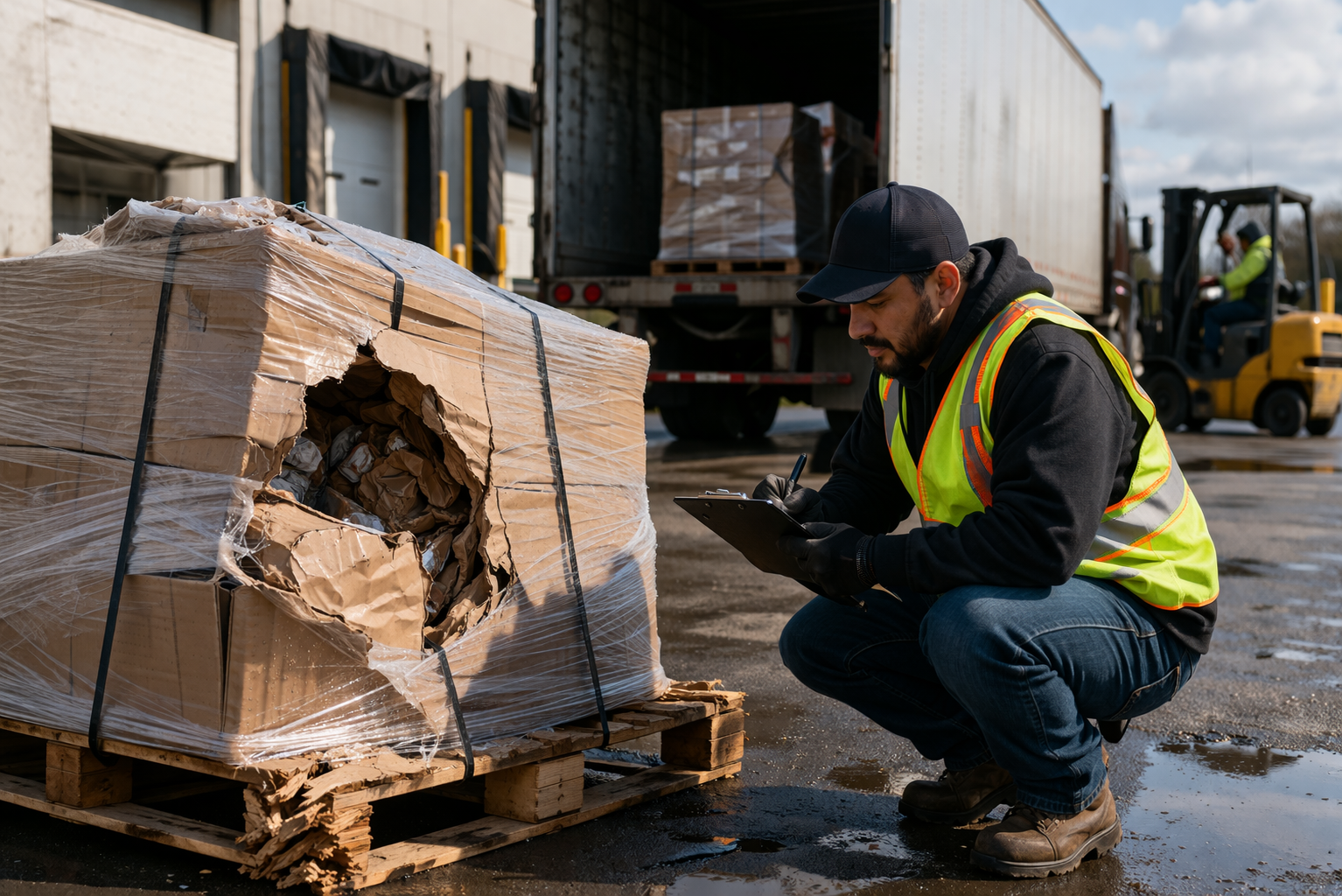
Your customer is waiting. The warehouse is ready. But your LTL shipment is sitting at a terminal three states away with no clear ETA. Or worse, the freight finally arrives and a pallet is crushed, a box is soaked, or pieces are missing altogether. You are now stuck filing a claim, managing an unhappy customer, and scrambling to replace the inventory. LTL shipment delays and damage are not rare edge cases. They happen regularly, and for many shippers, they happen often enough to be a serious operational problem. The real frustration is that most of these issues are preventable once you understand what actually causes them.
In this guide, we break down the most common root causes behind LTL delays and freight damage, explain the business impact of getting this wrong, and give you practical solutions you can apply to your next shipment. We also cover what to do when things go sideways, including how to handle LTL freight damage claims the right way.
Understanding LTL Shipment Delays and Damage: The Full Picture
Less Than Truckload shipping works differently from full truckload or parcel shipping. When you book an LTL shipment, your freight shares trailer space with multiple other shippers. It gets picked up at your location, moved to a carrier terminal, sorted and transferred one or more times, and eventually delivered to its destination.
Each of those handoff points is a place where things can go wrong. A pallet can be stacked incorrectly during a transfer. A shipment can miss a sort window and sit overnight at a terminal. Paperwork can be incomplete, causing a carrier to hold the load pending clarification.
The result is one of two problems, and often both:
- LTL transit time problems: Your freight arrives later than expected, throwing off delivery appointments, customer commitments, and downstream fulfillment operations.
- LTL cargo damage: Your freight arrives in worse condition than it left, triggering claims, replacements, and customer service headaches.
Neither problem is inevitable. Both have identifiable causes, and both respond well to the right preventive measures. The issue is that most shippers do not dig into the root causes until they are already dealing with the consequences.
Why LTL Delays and Damage Are More Costly Than They Appear
When a shipment arrives two days late or with a damaged corner, the visible cost is easy to calculate. You might lose the value of the damaged goods. You might pay a carrier to redeliver. You might issue a credit to an unhappy customer.
But the hidden costs are often larger:
- Customer trust erodes. One bad experience is easy to forgive. A pattern of late or damaged deliveries causes customers to quietly shift their business elsewhere.
- Operational disruptions compound. Late freight does not just delay one delivery. It can push back inventory replenishment, delay production schedules, and create bottlenecks across your supply chain.
- Claims cost time, not just money. Filing and following up on LTL freight damage claims is a time-consuming process. It pulls staff away from productive work and rarely results in full reimbursement under standard carrier liability terms.
- Your reputation takes the hit. In industries where B2B relationships are built on reliability, consistent delivery problems signal a vendor who cannot be counted on.
For Amazon sellers, the stakes are even higher. Missed FBA delivery windows lead to receiving penalties, inventory placement issues, and suppressed listings. A string of late or damaged shipments can disrupt an entire sales season. The bottom line: LTL shipment delays and freight damage are not just logistics problems. They are business problems that deserve serious attention.
To better understand how delays also impact your shipping costs, explore our guide on LTL shipping rates from New Jersey to major U.S. cities.
The Most Common Causes of LTL Shipment Delays and Damage
Understanding why these problems happen is the first step to preventing them. Here is a breakdown of the most common root causes and whether they are within your control.
| Root Cause | How Often It Happens | Preventable? |
| Incorrect or incomplete shipment info | Very common | Yes – provide full details at booking |
| Carrier terminal congestion | Seasonal / periodic | Partially – choose uncongested lanes |
| Freight reclassification by carrier | Common | Yes – verify class before shipping |
| Missed or late pickup | Occasional | Yes – book with lead time, use a broker |
| Weather and road disruptions | Unpredictable | Partially – build buffer time |
| High-volume peak season demand | Predictable (Q4, holidays) | Yes – ship early, plan ahead |
| Damaged or unstable pallets | Common | Yes – proper packaging and blocking |
| Accessorial surprises at delivery | Very common | Yes – disclose site requirements upfront |
1. Incorrect or Incomplete Shipment Information
This is the single most controllable cause of LTL delays. When the freight class is wrong, the dimensions are off, or delivery site requirements are not disclosed upfront, carriers encounter discrepancies at pickup or delivery that cause holds, reclassifications, and redelivery attempts. A shipment that gets reclassified mid-transit often sits at a terminal while the carrier and shipper sort out the billing difference. That can add one to three days to transit time and a significant surcharge to your invoice.
2. Carrier Terminal Congestion
LTL freight moves through multiple carrier terminals. During high-volume periods like Q4, the weeks before major holidays, or weather recovery periods, terminals back up. Freight misses sort windows, sits overnight, and arrives late at the next transfer point. This is not always avoidable, but choosing a broker who knows which carriers manage terminal congestion better than others on specific lanes makes a meaningful difference.
3. Poor Packaging and Pallet Stability
LTL freight gets handled far more than full truckload freight. Forklifts, pallet jacks, conveyor systems, and hand-stacking all introduce stress to your packaging. If a pallet is not stable, a box is not properly secured, or a product is not protected for the forces it will experience in transit, damage is almost guaranteed on enough shipments. This is one of the most preventable causes of LTL cargo damage, and one that shippers often overlook because the problem only becomes visible at the destination.
4. Missed or Late Pickups
Carriers do not always make their pickup windows. This is especially true in the Northeast, where traffic congestion, urban delivery complexity, and high volume lanes create real operational challenges. A missed pickup means your freight does not enter the carrier network on the day you planned, which shifts every downstream transit milestone by at least a day.
5. Accessorial Surprises at Delivery
If a delivery location requires a liftgate and the carrier does not have one on the truck, the delivery gets rescheduled. If the receiving location has limited access hours that were not disclosed, the driver cannot complete the delivery and it gets pushed to the next available attempt. These situations add days to transit time and extra charges to your invoice.
6. Seasonal Volume Surges
LTL transit time problems spike predictably during the peak shipping season from October through December, and again around major spring retail events. Carriers prioritize higher-paying loads when capacity is tight, and LTL freight can sit longer at terminals when the network is stretched. Shippers who plan around peak seasons and book earlier consistently see better transit outcomes than those who treat peak shipping like any other period.
How to Prevent LTL Freight Damage: Practical Steps That Actually Work
Preventing LTL cargo damage starts before the truck arrives. Here is what to focus on:
Package for the Journey, Not Just for Storage
The way you package freight for a warehouse shelf is not the same as how it should be packaged for LTL transit. In LTL, your freight will be moved multiple times, stacked under other freight, and subjected to vibration, shifting, and handling impacts that warehouse storage never involves. Packaging that passes storage with no problem can fail badly in transit. Design your packaging and palletization strategy around the transit conditions your freight will actually face.
Build Solid, Stable Pallets
A pallet that shifts or collapses at a transfer terminal is both a damage risk and a safety hazard. Use uniform boxes where possible, stack heavier items on the bottom, keep the load within the pallet footprint, and apply multiple layers of stretch wrap tightly enough to prevent any movement. Corner boards and edge protectors are inexpensive and significantly reduce the risk of corner and edge damage on boxed freight. They are worth using on almost any LTL pallet.
Label Every Piece Clearly
Every piece of your shipment, including individual boxes within a palletized load, should have a clearly visible label with destination information, shipper information, and PRO number. If freight gets separated at a terminal, clear labeling is what gets it reunited with the rest of your shipment rather than lost in the system.
Use Freight Insurance for High-Value Shipments
Standard carrier liability in LTL is based on freight class and weight, not actual cargo value. For most commodities, it covers a fraction of the replacement cost. If you are shipping goods with real commercial value, declared value coverage or third-party freight insurance is worth the cost.
A good freight broker will present this option before the shipment moves, not after a claim is filed.
| Freight Type | Common Damage Risk | Recommended Protection |
| Electronics / fragile goods | Impact, vibration | Double-box, foam inserts, fragile labels |
| Palletized consumer goods | Tipping, crushing | Edge boards, stable stacking, stretch wrap |
| Industrial / machinery parts | Shifting, scratching | Blocking, bracing, rust-inhibitor wrap |
| Food and beverage | Moisture, contamination | Waterproof packaging, sealed pallets |
| Furniture and fixtures | Corner damage, scuffs | Corner protectors, full pallet shroud |
| Building materials | Breakage from drop | Rigid crating for fragile items, clear labeling |
What to Do When Your LTL Shipment Is Late or Damaged
My LTL Shipment Is Late: What Now?
First, check the tracking. Many carriers provide terminal-level tracking updates. If the shipment has not moved in 24 to 48 hours beyond the expected transit window, that is worth escalating. Contact your broker or carrier directly and ask for a tracer. A freight tracer is a formal inquiry that triggers internal carrier investigation into the shipment’s location and status. A good broker will initiate this on your behalf and push for a response. Depending on how time-sensitive the freight is, you may also want to explore reshipment or rerouting options if the delay is significant.
My LTL Freight Arrived Damaged: Next Steps
Document the damage immediately and thoroughly before the driver leaves if possible. Photograph every damaged piece from multiple angles. Note the damage on the delivery receipt. Do not refuse the delivery unless the damage is so severe that the goods are completely unusable. Accepting a shipment with noted exceptions is different from accepting it without documentation. File an LTL freight damage claim promptly. Most carriers require claims to be filed within nine months of delivery, but the sooner you file, the better. Include photos, the original invoice, the bill of lading, and a clear description of the damage. Work through your broker to advocate for a fair resolution. Brokers who have strong carrier relationships and volume often get faster and more favorable claim outcomes than shippers acting alone.
Real-World Scenario: Turning Recurring LTL Problems into a Smooth Operation
A New Jersey-based industrial parts supplier was experiencing LTL shipment delays on roughly 20 percent of their outbound shipments. About one in fifteen shipments was arriving with damage significant enough to require a claim. Their operations team was spending two to three hours per week managing claims and carrier disputes.
When they contacted S&S Brokerage for a shipping review, a few things became clear quickly. First, they were using a single national carrier for all lanes, including regional Northeast deliveries where a regional carrier would have been faster and more reliable. Second, they were booking freight with approximate weights and dimensions because pulling exact measurements added time to their dispatch process. This was causing frequent reclassifications and mid-transit billing disputes that held shipments at terminals. Third, their pallets were being built by warehouse staff with no consistent standard. Some pallets were solid and well-wrapped. Others had unstable stacks and minimal stretch wrap. The result was unpredictable damage rates with no clear pattern.
S&S worked with them on three fronts. They moved Northeast regional lanes to a carrier with better terminal infrastructure in that corridor. They helped the operations team build a simple shipment preparation checklist so freight details were captured accurately at booking. And they recommended a basic palletization standard that all warehouse staff followed before any freight left the dock.
Within 90 days:
- On-time delivery improved from 80 percent to 96 percent on primary lanes
- Damage claim frequency dropped by over 60 percent
- Staff time spent on freight disputes dropped from several hours per week to under 30 minutes
None of these changes required significant investment. They required attention to the right details and a broker willing to dig into the specifics rather than just process orders.
Why Shippers Trust S&S Brokerage Inc. to Solve LTL Problems
S&S Brokerage Inc. is a New Jersey-based freight brokerage with over 20 years of combined industry experience, operating across all 48 contiguous states. The company works with a vetted carrier network that covers both regional and national LTL lanes. What makes S&S useful when it comes to LTL delays and damage specifically:
Carrier Selection That Matches the Lane
Not all carriers perform equally on all lanes. S&S has lane-specific knowledge that allows them to match your shipment with a carrier whose terminal network and service levels are well suited to your route. This alone reduces the likelihood of transit time problems significantly.
Proactive Shipment Monitoring
S&S does not just book a load and wait for delivery confirmation. The team monitors active shipments and reaches out proactively when something looks off. If a shipment stops moving or misses a terminal scan, the client hears about it before they have to ask.
Claims Support That Actually Helps
When damage does occur, S&S acts as an advocate in the claims process. The team has existing relationships with carrier claims departments and understands how to document and submit claims in a way that maximizes the likelihood of a fair outcome. Clients are not left to navigate that process alone.
Transparent Communication Throughout
Clients have a dedicated point of contact who knows their freight profile. There are no generic call center interactions when something goes wrong. You get a person who understands your lanes, your freight type, and your delivery requirements.
Focus on Root Causes, Not Just Symptoms
The S&S team does not just process shipments. When clients are experiencing recurring LTL problems, the team looks at the underlying causes, whether that is a carrier performance issue, a classification error, a packaging problem, or a booking process gap, and works to address them directly.
10 Actionable Tips to Reduce LTL Delays and Damage Starting Now
You do not need to overhaul your entire logistics operation to see improvement. These ten steps target the most common causes of LTL problems and can be implemented immediately:
- Verify your freight class before every shipment. Do not estimate. Use the correct NMFC classification or ask your broker to confirm it. One misclassification can delay a shipment and add unexpected costs.
- Provide accurate weight and dimensions at booking. Round up on weight slightly if you are estimating. A carrier discovering heavier or larger freight than documented at pickup creates paperwork delays.
- Disclose every delivery requirement upfront. Liftgate needs, residential addresses, limited access locations, inside delivery, and appointment-only sites all need to be communicated before booking, not discovered at delivery.
- Build pallets to a consistent standard. Every pallet leaving your dock should be stable, within the pallet footprint, properly stretch-wrapped, and labeled on all visible sides.
- Use corner boards and edge protectors on boxed freight. This low-cost step significantly reduces edge and corner damage, which is one of the most common damage types in LTL transit.
- Consider freight insurance for high-value shipments. Standard carrier liability is rarely enough to cover actual cargo value. Ask your broker about declared value coverage or third-party cargo insurance.
- Book LTL shipments with adequate lead time. Same-day or next-day bookings increase the chance of carrier issues. When possible, book 24 to 48 hours ahead to allow for proper carrier selection and pickup scheduling.
- Ship early during peak seasons. Q4 is the most congested LTL period of the year. Shipments booked in early October face fewer delays than those booked in mid-November. Plan your inventory timing around carrier network realities.
- Document delivery condition before signing. When freight arrives, inspect it before signing the delivery receipt. If you see damage, note it on the receipt and photograph it. This documentation is critical for any claim.
- Work with a freight broker who monitors your shipments actively. A broker who tracks loads in transit and communicates proactively gives you a much better chance of catching and responding to problems before they turn into full delays or failed deliveries.
Conclusion: LTL Shipment Problems Are Preventable – But Only If You Address the Root Cause
LTL shipment delays and freight damage feel like random bad luck until you start looking at the patterns. Most of the time, there are specific, identifiable causes behind the problems. And most of those causes can be fixed with the right preparation, the right carrier selection, and the right logistics partner. You should not have to spend hours every week chasing freight, disputing invoices, or filing damage claims. That time and energy should go toward growing your business, not managing shipping failures.
S&S Brokerage Inc. works with New Jersey businesses and shippers across the U.S. to build LTL shipping programs that are actually reliable. Not perfect, because no freight operation ever is, but consistent, transparent, and genuinely easier to manage.
Frequently Asked Questions: LTL Shipment Delays and Freight Damage
Why is my LTL shipment late?
LTL shipments are late for a variety of reasons. The most common include incorrect freight class or shipment information that causes a hold at a carrier terminal, missed pickup windows due to carrier capacity issues, terminal congestion during peak seasons, weather events, and accessorial surprises at delivery such as an undisclosed liftgate requirement. Working with a freight broker who actively monitors shipments and knows how to escalate delays quickly is the most effective way to reduce late deliveries.
How do I file an LTL freight damage claim?
Start by documenting the damage at delivery, photographing every affected piece and noting the damage on the delivery receipt before the driver leaves. Then file a formal freight claim with the carrier. Include photos, the original commercial invoice showing cargo value, the bill of lading, and a written description of the damage. Most carriers require claims to be filed within nine months of delivery, but filing sooner is better. If you are working with a freight broker, they can submit and advocate on your behalf, which often leads to faster and fairer resolutions.
What is the most common cause of freight damage in LTL shipping?
Inadequate packaging and pallet instability are the most common causes of LTL freight damage. Because LTL shipments are handled multiple times at carrier terminals, freight that is not properly secured is vulnerable to shifting, tipping, and impact damage. Using stable pallet builds, corner boards, edge protectors, and sufficient stretch wrap significantly reduces damage frequency on most freight types.
How long does an LTL damage claim take to resolve?
LTL freight damage claims can take anywhere from two weeks to several months depending on the carrier, the complexity of the claim, and how well it was documented. Claims that are filed promptly with thorough documentation, including clear photos and accurate cargo value, tend to resolve faster. Working through a freight broker with established carrier relationships can also speed up the process.
Can I prevent LTL shipment delays entirely?
You cannot eliminate all LTL delays since some causes, like weather events or sudden carrier capacity issues, are outside your control. But you can eliminate the majority of preventable delay causes by providing accurate shipment information at booking, using a broker who knows which carriers perform well on your lanes, booking with adequate lead time, and disclosing all delivery requirements upfront. Shippers who follow these practices consistently see significantly better on-time delivery rates.
What does standard carrier liability cover for LTL damage?
Standard carrier liability in LTL is based on a cents-per-pound formula tied to freight class, not actual cargo value. For many commodities, this covers only a small fraction of the real cost of damaged goods. If you are shipping products with meaningful commercial value, you should consider purchasing declared value coverage from the carrier or a third-party cargo insurance policy. Ask your freight broker about coverage options before your shipment moves.
How does a freight broker help with LTL delays and damage?
A freight broker adds value in several ways. They have access to multiple carriers and can choose the one best suited to your lane and freight type, reducing the chance of delays caused by poor carrier fit. They monitor shipments in transit and escalate issues proactively. When damage occurs, they act as your advocate in the claims process, using their carrier relationships to push for faster and fairer outcomes. And they can identify patterns in recurring problems that individual shippers often miss because they do not have visibility across multiple carriers and lanes.