



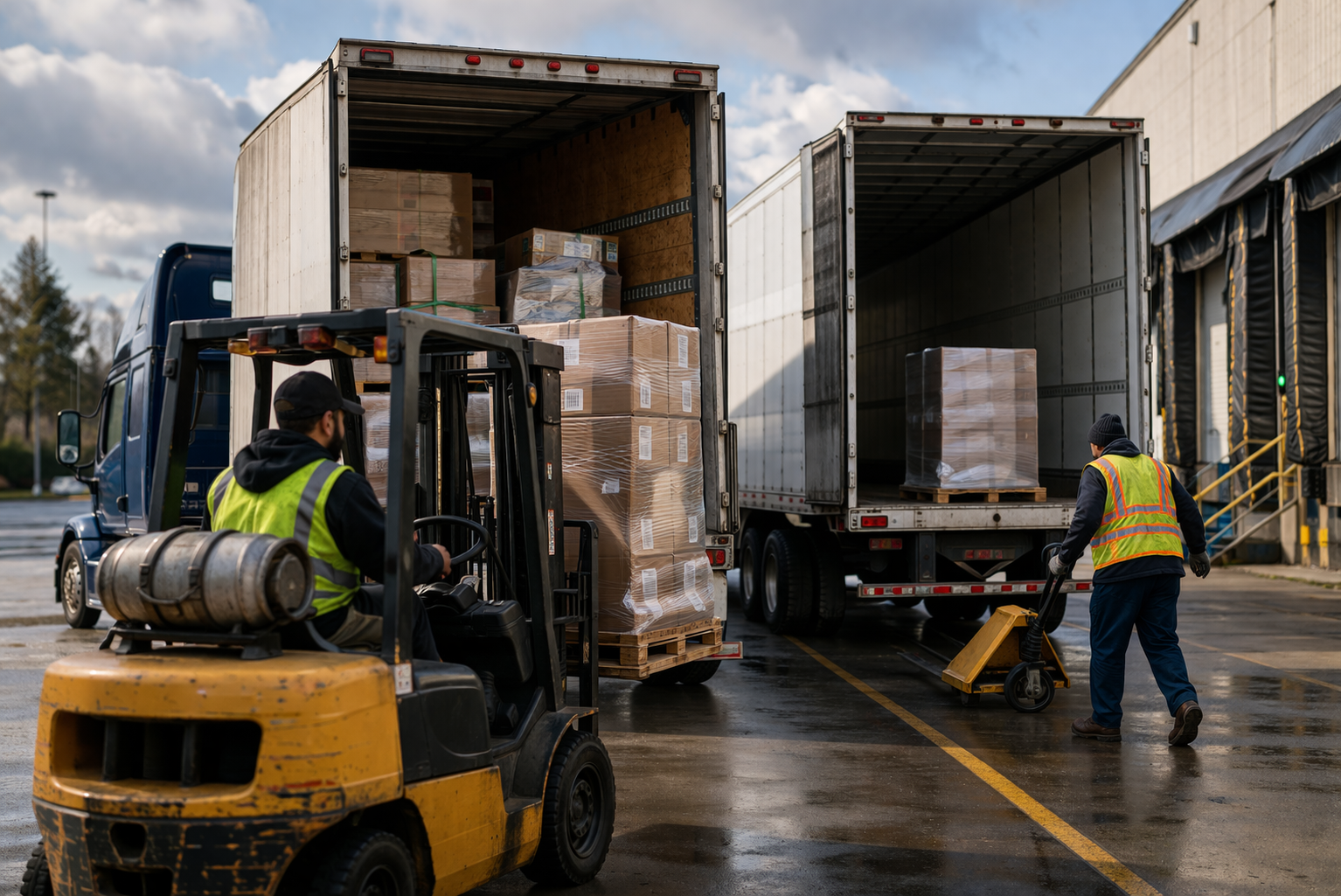
LTL vs FTL shipping cost comparison is one of the most important decisions businesses face when planning freight in 2026. Should you book a full truck or share trailer space? It may seem simple, but choosing the wrong mode can directly impact your margins, transit time, and overall efficiency. Many businesses overspend by booking full truckloads when LTL would cost significantly less. Others push large shipments into LTL and end up paying more through reclassification fees, delays, and damage claims.
This guide breaks down LTL vs FTL shipping in a clear, practical way so you can understand which option is cheaper for your freight. You’ll learn when to use each mode, what impacts cost, and how to make the most cost-effective decision every time. Before we get into costs and decision frameworks, it helps to understand what each mode actually involves operationally. The differences go deeper than just how much space you use.
What Is LTL Shipping?
LTL stands for Less Than Truckload. When you book an LTL shipment, your freight shares trailer space with other shippers. You pay only for the space and weight your freight occupies, and the carrier consolidates multiple shippers’ loads into one trailer to maximize efficiency.
The trade-off is that your freight moves through a hub-and-spoke network. It gets picked up, taken to a carrier terminal, sorted, potentially transferred to another terminal, and then delivered. Each of those stops adds time to transit and introduces another handling touchpoint.
LTL is the right choice when your shipment is too large for parcel shipping but does not justify a dedicated truck. The general range is 150 to 15,000 pounds, or roughly one to twelve pallets.
What Is FTL Shipping?
FTL stands for Full Truckload. When you book an FTL shipment, you are reserving the entire trailer for your freight. The truck picks up your load and drives directly to the destination, with no stops at carrier terminals and no other shippers’ freight sharing the space.
You pay a flat rate for the full trailer regardless of whether you use all of it. This means FTL only makes economic sense when you have enough freight to justify the cost of the whole truck. The sweet spot is typically 14 or more pallets, or freight weighing 10,000 pounds or more.
Because the freight is loaded once and unloaded once with no intermediate handling, FTL is faster, involves less damage risk, and offers better visibility through direct driver tracking.
Why Getting This Decision Right Matters for Your Business
Choosing the wrong freight mode is not just a cost issue. It affects your entire supply chain performance.
If you consistently use FTL when LTL would serve you just as well, you are paying for trailer space you do not need. On a lane like New Jersey to Atlanta, a full truckload can cost $2,000 to $2,800 for a shipment that might cost $400 to $700 via LTL. Do that math across fifty shipments a year and the overspend becomes significant.
On the other hand, if you push freight into LTL that should really go FTL, you deal with slower transit times, higher damage rates from multi-point handling, and sometimes rates that end up comparable to FTL anyway once reclassification and accessorial charges stack up.
For small businesses and Amazon sellers, this decision directly impacts margin and competitiveness. For larger shippers and distributors, it affects inventory velocity, customer satisfaction, and carrier relationship leverage. There is no one-size-fits-all answer, but there are clear principles that make the right call obvious once you understand them.
LTL vs FTL Shipping Cost Comparison: Side by Side
Here is a clear side-by-side comparison across the factors that matter most when making this decision.
| Factor | LTL (Less Than Truckload) | FTL (Full Truckload) |
| Best for | 150 to 15,000 lbs, 1 to 12 pallets | 10,000+ lbs, 14+ pallets, full trailers |
| Pricing basis | By space and weight used | Flat rate for the full trailer |
| Transit time | 2 to 5+ days (multi-stop route) | 1 to 3 days (direct delivery) |
| Handling | Multiple terminal transfers | Loaded once, unloaded once |
| Damage risk | Higher (more handling) | Lower (fewer touchpoints) |
| Flexibility | Ship smaller loads frequently | Requires full load to be cost-effective |
| Cost: small loads | More economical | Expensive – paying for unused space |
| Cost: large loads | Can become expensive | Usually more cost-effective |
| Tracking | Terminal-level updates | Real-time GPS in most cases |
| Time sensitivity | Standard or expedited options | Better for tight delivery windows |
| Ideal users | SMBs, e-commerce, importers | Manufacturers, distributors, retailers |
Note: Rates and transit times are typical 2026 market estimates and will vary by lane, carrier, freight class, and specific shipment requirements.
Real Cost Scenarios: LTL or FTL Which Is Cheaper for Your Shipment?
Abstract comparisons only go so far. Here are real-world shipment profiles with approximate costs for both modes so you can see where the crossover points actually fall.
| Shipment Profile | Weight | Pallets | LTL Estimate | FTL Estimate | Better Option |
| Small e-comm restock NJ to ATL | 800 lbs | 2 | $180 to $280 | $1,800 to $2,400 | LTL by far |
| Mid-size distributor NJ to CHI | 4,500 lbs | 8 | $650 to $950 | $1,900 to $2,500 | LTL still better |
| Large retail order NJ to DAL | 14,000 lbs | 22 | $2,400 to $3,200 | $2,100 to $2,700 | FTL better value |
| Full warehouse move NJ to LA | 40,000 lbs | Full trailer | Not applicable | $4,500 to $6,000 | FTL only option |
| Fragile / high-value goods any lane | Varies | Varies | Higher with insurance | Flat rate, less handling | FTL for safety |
The pattern is clear. LTL wins on cost for smaller, lighter loads. As weight and pallet count climb toward the 12 to 16 pallet range, the numbers start to converge. Beyond that, FTL becomes the more economical choice and often the better operational choice as well.
The exact crossover point varies by lane. On a short regional haul like NJ to Philadelphia, LTL may remain cost-competitive at higher weights because transit times are similar. On a long-haul lane like NJ to Los Angeles, FTL often makes more sense at lower pallet counts because the transit time and handling differences become more significant over longer distances.
When to Use LTL vs FTL: A Simple Decision Framework
Use this framework to quickly determine the right mode for any given shipment. These are not rigid rules, but they capture the logic that experienced shippers use when making this call.
Choose LTL When:
- Your freight is between 150 and 10,000 pounds and fits on one to eight pallets
- You ship regularly in smaller quantities and need cost efficiency over speed
- Your freight is non-fragile and packaged to handle multiple handling points
- You are a small or mid-sized business that cannot generate full truckload volume
- You are an Amazon seller restocking FBA inventory in smaller, frequent shipments
- The delivery timeline is flexible and you can absorb two to five day transit times
- You want to pay only for the space you actually use
Choose FTL When:
- Your freight exceeds 10,000 pounds or fills 14 or more standard pallets
- Your freight is fragile, high-value, or cannot risk multi-terminal handling
- You need a guaranteed delivery date or a tight delivery window
- The shipment contains hazardous materials that require dedicated carrier compliance
- You are moving an entire warehouse section or production inventory to a new location
- Transit time savings outweigh the cost premium over LTL for your business case
- You have consistent high-volume lanes where direct service is more reliable
The Gray Zone: Volume LTL
When your shipment falls between 6 and 14 pallets, you are in the gray zone where neither mode has an obvious cost advantage. This is where Volume LTL becomes relevant. Volume LTL is a negotiated option that carriers offer for larger LTL shipments that do not quite reach full truckload size. It gives you a rate between standard LTL and FTL pricing, with better transit performance than multi-stop LTL routing. A freight broker with volume relationships can access these rates and present them as a third option when your load falls into this middle range. It is a significant advantage over going directly to a carrier.
| Your Situation | Recommended Mode | Reason |
| Shipping less than 6 pallets | LTL | You only pay for space used |
| Shipping 14 or more pallets | FTL | Flat rate beats per-pallet LTL cost |
| Freight is time-sensitive | FTL (or expedited LTL) | Direct delivery, no terminal stops |
| Freight is fragile or high-value | FTL preferred | Less handling equals less risk |
| Budget is tight, timeline is flexible | LTL | Lower upfront cost for smaller loads |
| You ship the same lane weekly | Evaluate both | Volume discounts may apply to either |
| Freight is hazardous or specialized | FTL with certified carrier | Control and compliance matter more |
| You are unsure of the right mode | Talk to a broker | Lane analysis finds the best fit |
Common Mistakes Shippers Make When Choosing Between LTL and FTL
Defaulting to FTL Out of Habit
Many businesses start shipping FTL when they have large volumes, then never revisit the decision as their shipment profiles change. If your load sizes have decreased over time, you may be paying for full trucks when LTL would serve you at a fraction of the cost. This is especially common among businesses that transitioned from wholesale distribution to smaller, more frequent e-commerce fulfillment runs. The freight mode habit outlasts the operational reality.
Forcing Too Much Freight into LTL
The opposite problem is just as real. Shippers who send 15 to 18 pallets via LTL because they have always used LTL end up paying more than they would for FTL, on top of slower transit times and higher damage rates from the extra handling. If you are regularly booking LTL at the high end of your capacity and your freight is piling up with reclassifications and damage issues, it is worth getting an FTL quote for comparison.
Ignoring Transit Time When Calculating Cost
Cost per shipment is not the only number that matters. If LTL transit on your lane averages four days and FTL gets there in two, the operational value of those two days needs to factor into the calculation. For manufacturers with just-in-time production schedules, those days have real dollar values. For retail replenishment, slower transit can mean stockouts during a promotional period. True cost-effectiveness includes the cost of the transit time, not just the freight rate.
Not Accounting for Accessorial Charges in LTL
LTL pricing is more complex than FTL pricing. Base rates attract shippers, but liftgate fees, residential delivery surcharges, fuel surcharges, and reclassification charges add up quickly. A shipper comparing a clean LTL base rate to an all-in FTL rate is not doing an accurate comparison. Always compare all-in costs for both modes, including every charge that will appear on your final invoice.
Real-World Scenarios: How NJ Businesses Get This Decision Right
Scenario 1: The Amazon Seller Who Was Overpaying on Every Shipment
A New Jersey-based Amazon seller was shipping inventory replenishments to FBA fulfillment centers in Chicago, Dallas, and Los Angeles. Their average shipment was four to six pallets per lane, around 3,000 to 4,500 pounds. They had been using FTL because their original operations director had set it up that way when they were shipping much larger volumes. By the time they reached out to S&S Brokerage, their product mix had shifted and their per-shipment pallet count had dropped significantly. S&S ran an LTL vs FTL cost comparison on their three primary lanes. On the NJ to Chicago run, they were paying approximately $2,200 per FTL shipment. The LTL equivalent for their actual load size came in at $680 to $820, including fuel surcharges and all accessorials. Switching those three lanes to LTL immediately reduced their quarterly freight spend by over $40,000 without any change to transit times that affected their FBA receiving windows.
Scenario 2: The Distributor Who Was Damaging Product by Using LTL
A mid-sized kitchen appliance distributor in Newark, NJ was shipping 14 to 16 pallets of assembled appliances to a retail chain in the Southeast. They were booking LTL because the rate looked lower than FTL on the initial quote. But every two to three shipments, something arrived damaged. Appliances are fragile, heavy, and sensitive to the multiple handling points that LTL involves. Each damage claim was eating into their margin and straining the retail relationship. S&S recommended moving those lanes to FTL. The flat rate was slightly higher than the LTL base rate, but comparable once accessorials were included. The benefit was direct delivery with no terminal transfers, which reduced their damage rate from roughly one incident per three shipments to near zero over the following quarter. The true cost of LTL for that freight was not just the freight rate. It included damaged goods, replacement costs, customer service time, and strained business relationships. FTL was the right answer, and the numbers confirmed it once the full picture was visible.
Why S&S Brokerage Inc. Helps You Make the Right Mode Decision
S&S Brokerage Inc. is a New Jersey-based freight brokerage with over 20 years of combined industry experience, operating across all 48 contiguous states. The company works with a vetted carrier network covering both LTL and FTL service, giving clients access to competitive rates on both modes. Here is what makes S&S particularly useful when you are trying to make the LTL vs FTL decision:
Access to Both Modes Through One Partner
S&S has established carrier relationships on both the LTL and FTL side. That means you can get accurate, comparable quotes for both modes from a single source, rather than shopping multiple carriers independently and comparing apples to oranges.
Lane-Specific Knowledge
The right mode decision varies by lane. What works best on NJ to Chicago is not necessarily what works best on NJ to Los Angeles or NJ to Miami. S&S has lane-specific pricing intelligence that allows them to recommend the most cost-effective option for your specific route.
Volume LTL Access
When your load falls into the gray zone between standard LTL and FTL, S&S can often access Volume LTL pricing that sits between the two. This is a rate tier that most shippers cannot access without a broker with the right carrier volume relationships.
Full Picture Cost Analysis
S&S provides all-in cost comparisons that include fuel surcharges, accessorials, and any lane-specific additions. You never compare a bare LTL base rate to a fully loaded FTL rate and draw the wrong conclusion.
Ongoing Optimization
Shipping needs change as businesses grow, seasons shift, and carrier networks evolve. S&S does not just help you make a one-time decision. They monitor your freight lanes and alert you when a mode switch would save you money or improve your service level.
8 Actionable Tips for Making the LTL vs FTL Decision Smarter Every Time
Put these into practice on your next freight decision and you will immediately improve your cost-effectiveness:
- Know your load profile before you get a quote. Weight, dimensions, pallet count, and freight class all affect which mode is more economical. Have this information ready before you contact a carrier or broker.
- Get all-in quotes for both modes when you are near the crossover point. If you are shipping 10 to 16 pallets, always request a comparison. The mode that looks cheaper on the base rate is not always cheaper once everything is factored in.
- Factor in transit time as a cost variable. If LTL saves you $300 but adds two days to transit on a time-sensitive lane, the savings may not be real once you account for inventory carrying costs or customer impact.
- Evaluate fragile freight more carefully. If your product has a damage rate above 2 to 3 percent in LTL, that is a signal to consider FTL even if the per-shipment rate is higher. Damage replacement costs add up quickly.
- Ask about Volume LTL for mid-size loads. If your shipment is 6 to 14 pallets, ask your broker whether Volume LTL pricing is available on your lane. It is often a better option than either standard LTL or a full truckload commitment.
- Review your mode decisions quarterly. Your load sizes and lane mix change over time. A mode that made sense six months ago may no longer be the best fit. Build a habit of reviewing your freight patterns with your broker regularly.
- Track your accessorial charges by mode. If LTL accessorials are consistently adding 20 to 30 percent on top of your base rate, that gap closes the apparent cost advantage of LTL over FTL. Tracking this over time gives you a clearer picture of true cost.
- Use a freight broker who works both sides. A broker with LTL and FTL carrier relationships is better positioned to give you objective advice than a carrier rep who only sells one product. Objectivity matters when real money is on the line.
Conclusion: The Right Mode Decision Pays for Itself
The LTL vs FTL shipping cost comparison is not a one-time decision you make and forget. It is something that should be revisited regularly as your business changes and as freight market conditions shift. LTL is an excellent, cost-effective mode for the right loads on the right lanes. FTL is the better choice when freight volume, fragility, or time sensitivity justifies the rate. And Volume LTL fills the gap for loads that sit between the two. The businesses that get this right consistently are the ones working with a freight partner who understands both modes, has access to competitive pricing on both sides, and takes the time to evaluate each shipment on its actual merits rather than defaulting to habit. S&S Brokerage Inc. does exactly that. With over 20 years of combined industry experience and carrier relationships across 48 states, the team helps businesses make smarter mode decisions every day.
Frequently Asked Questions: LTL vs FTL Shipping
What is the main difference between LTL and FTL shipping?
LTL (Less Than Truckload) shipping means your freight shares trailer space with other shippers and you pay only for the space your load occupies. FTL (Full Truckload) means you reserve the entire trailer for your freight and pay a flat rate for the whole truck. LTL goes through multiple carrier terminals and is better for smaller loads. FTL is a direct, point-to-point delivery and is better for large or fragile loads that justify the full trailer cost.
When is LTL cheaper than FTL?
LTL is typically cheaper for shipments under 10,000 pounds or fewer than 12 pallets. For these load sizes, you are only paying for the fraction of the trailer your freight occupies, which is significantly less than the flat rate for a full truck. As your load grows beyond 12 to 14 pallets, the per-unit cost advantage of LTL shrinks and FTL becomes more competitive on a total-cost basis.
When should I use FTL instead of LTL?
Use FTL when your shipment is large enough to fill most of a trailer (14 or more pallets or 10,000 pounds or more), when your freight is fragile or high-value and cannot handle multiple terminal transfers, when you need guaranteed delivery on a specific date, or when the total cost of LTL with all accessorials and potential reclassification is comparable to FTL anyway. FTL also makes sense when faster transit time has a real business value that outweighs any rate difference.
What is Volume LTL and when does it apply?
Volume LTL is a negotiated shipping option for loads that are too large for standard LTL pricing to be cost-effective but not large enough to justify booking a full truckload. It typically applies to shipments in the 6 to 14 pallet range. Volume LTL rates sit between standard LTL and FTL, and they are usually only accessible through a freight broker with the right carrier volume relationships. If your loads consistently fall in this range, ask your broker whether Volume LTL pricing is available on your lanes.
How do I calculate whether LTL or FTL is more cost-effective for my shipment?
Start by getting all-in quotes for both modes, not just base rates. For LTL, include fuel surcharges, any accessorial charges specific to your delivery location, and the applicable freight class rate. For FTL, include the flat lane rate and any applicable fuel adjustments. Then factor in transit time differences and the value of those days to your operation. If you are near the crossover point, a freight broker can run this comparison quickly and objectively for you.
Is FTL always faster than LTL?
Yes, in most cases. FTL is a direct, point-to-point delivery with no terminal stops. LTL moves through a hub-and-spoke network with multiple handling points along the route. A shipment that takes two to three days by FTL might take three to five days by LTL on the same lane. The gap is smaller on shorter regional hauls and larger on long-distance cross-country lanes. If transit time is a priority, FTL almost always wins.
Can S&S Brokerage handle both LTL and FTL shipments from New Jersey?
Yes. S&S Brokerage Inc. manages both LTL and FTL freight from New Jersey across all 48 contiguous states. The company has vetted carrier relationships on both sides and can provide accurate, all-in comparisons for both modes on your specific lanes. Whether you need a single pallet shipped LTL or a dedicated truck for a full load, S&S can handle the coordination and find competitive pricing.
Thanks for breaking down the LTL vs FTL cost comparison— it’s helpful to see how factors like shipment size and delivery speed can influence pricing. I especially appreciated the insight on how intermodal options might offer a middle ground for shippers looking to balance cost and efficiency. This kind of detailed analysis really helps inform better logistics decisions.