



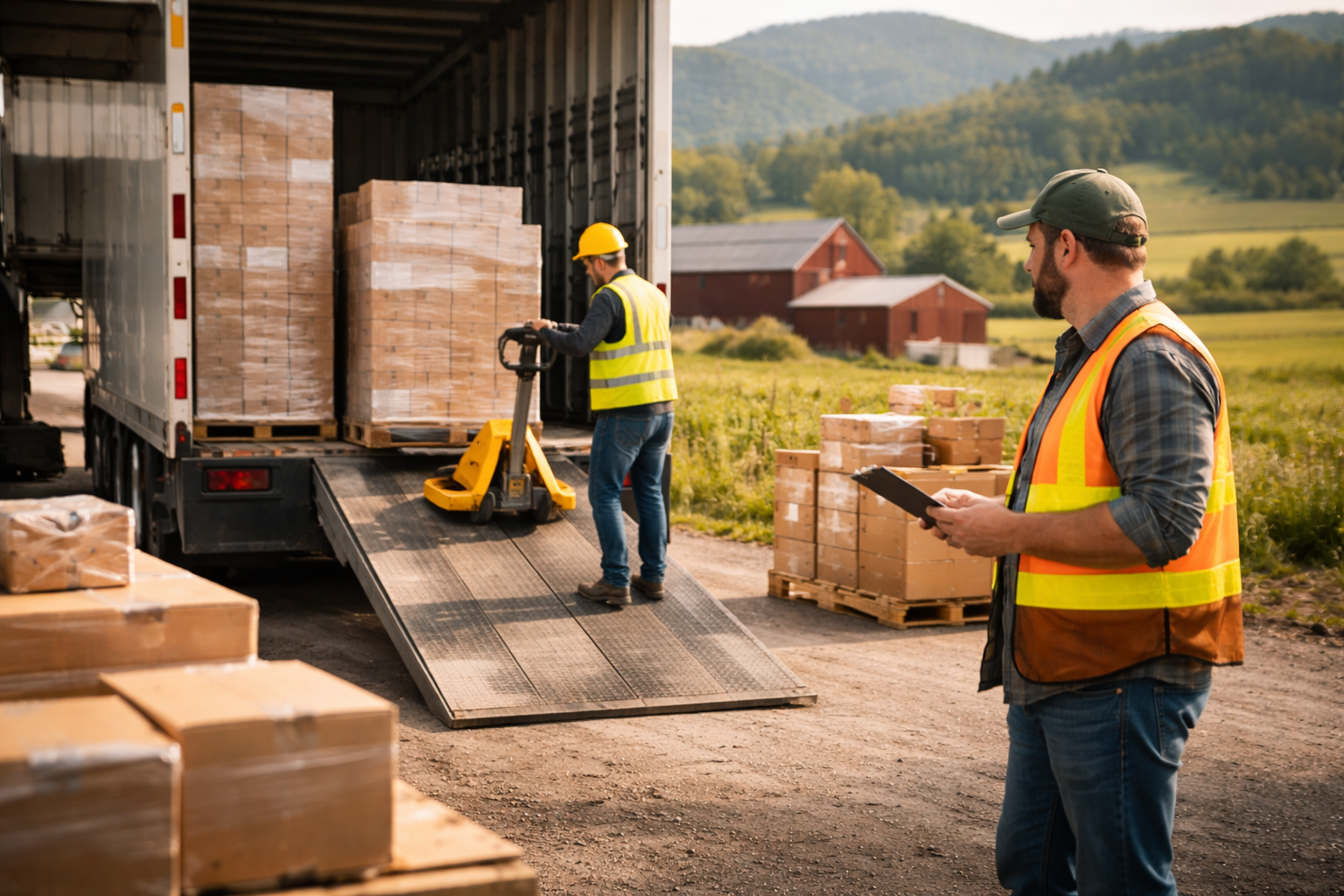
Running freight into rural markets can look like a solid opportunity. Long miles, steady linehaul, and fewer stops. But experienced carriers know the real challenge begins after delivery. You are in a low-density area with limited outbound freight, and finding a reload can quickly turn a good-paying load into a costly trip. That is why many carriers hesitate when they see destinations in remote regions, even when the rate looks strong upfront.
But not every rural load is a bad move. The difference lies in how you plan, evaluate, and execute these lanes. Carriers who run rural freight loads USA into remote and low-density regions profitably are not just lucky. They follow a deliberate approach that accounts for the full picture, not just the inbound rate.
At S&S Brokerage, we work closely with carriers handling long-haul and rural freight across the U.S., and we have seen firsthand what separates profitable lanes from costly ones. In this guide, we break down how smart carriers approach rural freight loads USA in 2026, how they minimize deadhead miles, plan ahead for reloads, and turn uncertain routes into consistent revenue opportunities.
What Rural Freight Loads in the USA Really Mean for Carriers (2026)
Rural freight is not a single category. It covers a wide range of commodities, industries, and regions. What connects them is the operational challenge they share: low outbound freight density at the destination. When a carrier delivers to Chicago or Dallas, they are dropping into a major freight hub. Outbound loads are everywhere. The reload search takes minutes, not days. The math is simple and the risk is low.
When that same carrier delivers to Williston, North Dakota or a mining site in rural Nevada, the situation is fundamentally different. The nearest freight hub may be 150 to 200 miles away. Outbound loads are limited, seasonal, or dependent on specific industries that have their own demand cycles.
The types of freight that most commonly move into rural markets in the USA include:
- Energy and oilfield equipment heading to extraction sites in the Bakken, Permian, and similar fields
- Agricultural inputs like seed, fertilizer, and equipment moving into farming regions
- Construction and infrastructure materials serving rural expansion projects
- Lumber and forest products moving into processing areas in the Pacific Northwest and Appalachia
- Heavy mining and utility equipment serving remote industrial operations
Each of these freight types has its own reload profile and seasonal pattern. A carrier who understands those patterns can plan around them. One who does not will end up absorbing deadhead miles that wipe out the profit margin on an otherwise solid load.
Why Rural Freight Loads in the USA Impact Your Bottom Line
Every carrier knows that the inbound rate is only half the equation. The real cost of a load includes your deadhead miles to the next freight, your time sitting at a truck stop waiting for a reload, and the fuel burned repositioning yourself back into a productive lane. Here is why getting this calculation wrong on rural loads is particularly costly:
Deadhead Miles Are More Expensive Than Most Carriers Budget
A common estimate for deadhead operating cost runs between $1.50 and $2.00 per mile when you factor in fuel, truck wear, and time. On a rural delivery that leaves you 200 miles from the nearest freight hub, that is $300 to $400 in pure cost before you even find the next load.
If the inbound rate was $3.00 per mile on a 1,400-mile haul, you grossed $4,200. But if you spend 200 miles deadheading to the reload zone, you have effectively driven 1,600 miles to earn $4,200, which brings your real per-mile revenue down to $2.63. The load that looked strong is now average at best.
Time Costs Money Even When the Truck Is Not Moving
Beyond fuel and miles, time sitting at a rural truck stop waiting for a reload is lost revenue. A driver who spends 24 hours idle after a rural delivery waiting for outbound freight to materialize has lost the equivalent of another good load.
Carriers who run rural lanes profitably build reload planning into the dispatch process before the truck ever leaves the origin. They know what the options are before they commit to the delivery, not after.
Repeat Lanes Change the Rural Freight Math Completely
A one-time rural delivery is a calculated risk. A repeat rural lane with scheduled volume is an entirely different business. When a carrier can reliably deliver into a region on a consistent schedule and build relationships with local brokers or shippers for the outbound, the deadhead risk shrinks and the predictability grows.
This is where the real money in rural freight lives, not in the one-off spot loads, but in the lanes that can become part of a carrier’s regular rotation.
How Smart Carriers Evaluate Rural Loads Before Saying Yes
Profitable carriers treat every rural load offer as a business decision that requires a quick but complete analysis. Here is the framework that experienced operators use before committing to a rural delivery.
| Evaluation Factor | What Smart Carriers Check | Why It Matters |
| Outbound freight availability | DAT, Truckstop, broker contacts in region | Determines realistic deadhead exposure |
| Distance from nearest freight hub | Miles to closest active load board city | Guides deadhead cost calculation |
| Commodity type at destination | Oil field, ag, lumber, industrial | Predicts what outbound loads will look like |
| Time of year / seasonality | Harvest, construction, extraction cycles | Seasonal freight improves reload options |
| Repeat load availability | One-time vs scheduled multi-stop lane | Repeat loads change the math entirely |
| Broker relationships in the region | Local vs national broker networks | Local brokers often have rural outbound loads |
| Rate premium vs standard lanes | Is the inbound rate high enough to absorb deadhead? | Fair compensation makes rural loads viable |
The evaluation does not take long once you have the right information in front of you. A carrier who can answer each of these questions before accepting a rural load is in a fundamentally stronger position than one who says yes based on the inbound rate alone.
Rural Freight Categories and What They Mean for Reload Planning
Not all rural freight is created equal when it comes to reload potential. The commodity you deliver tells you a lot about what outbound freight will look like at the destination.
| Rural Freight Category | Common Destinations | Equipment Needed | Outbound Reload Potential |
| Energy / oil field supply | North Dakota, Wyoming, West Texas | Flatbed, step-deck, heavy haul | Moderate – oilfield backhaul loads exist |
| Agricultural inputs | Iowa, Nebraska, Kansas, Dakotas | Flatbed, dry van, reefer | Seasonal – harvest outbound is strong |
| Construction materials | Rural Montana, Idaho, New Mexico | Flatbed, lowboy | Low off-season, high during build season |
| Lumber / forest products | Pacific Northwest, Appalachia | Flatbed, specialized | Regional mills provide outbound loads |
| Mining equipment | Nevada, Arizona, Colorado | Heavy haul, lowboy, step-deck | Low density – requires advance planning |
| Utility / infrastructure | Nationwide rural expansions | Flatbed, specialized | Improving as grid investment grows |
The most reload-friendly rural freight categories are energy and agricultural deliveries, because both industries generate consistent outbound traffic in the opposite direction. Oilfield supply deliveries often reload with frac sand, pipe, or equipment moving back to fabrication hubs. Agricultural deliveries often reload with grain, livestock, or processed food products during harvest seasons. Construction and mining deliveries are more challenging because their outbound profiles are thinner and less predictable. Carriers who specialize in these categories typically develop direct relationships with local shippers or aggregators rather than relying on the open load board.
Planning Your Deadhead: How to Run the Numbers Before You Commit
The deadhead calculation should be automatic for any rural load. Here is a simple reference for estimating deadhead exposure on some of the most common rural delivery regions in the USA.
| Scenario | Deadhead Miles | Est. Cost @ $1.80/mile | Load Rate Needed to Break Even |
| Rural ND delivery, reload in Fargo | 180 miles | $324 | Add $324 to total cost floor |
| Rural MT delivery, reload in Billings | 140 miles | $252 | Add $252 to total cost floor |
| Remote WY delivery, reload in Casper | 220 miles | $396 | Add $396 to total cost floor |
| Rural West TX, reload in Midland-Odessa | 95 miles | $171 | Add $171 to total cost floor |
| Rural NM delivery, reload in Albuquerque | 200 miles | $360 | Add $360 to total cost floor |
These estimates assume a deadhead operating cost of $1.80 per mile, which is a reasonable mid-range figure for 2026 diesel prices. Carriers with higher fuel costs or older equipment should adjust upward. The point of this calculation is not to avoid rural loads. It is to make sure the inbound rate is strong enough to absorb the real total cost of the run, including the deadhead miles back to productive freight territory. A rural delivery that pays a $500 premium over a standard lane rate but costs $400 in deadhead is still profitable. A rural delivery that pays the same premium but costs $700 in deadhead is a loss.
The 3-Question Check Before Every Rural Freight Loads
Before accepting any rural or low-density delivery, run through these three questions:
- What is my realistic deadhead cost to the nearest outbound freight zone?
- What loads are currently available in that zone, and are the rates worth the deadhead?
- Is this a one-time delivery or part of a repeatable lane with scheduled volume?
If the inbound rate covers your deadhead cost with room to profit, and the outbound market is reasonable, the rural load can work. If the math does not clear those three questions, it is not a lane worth taking at that rate.
Real-World Example: The Southern California to North Dakota Flatbed Lane
One of the live lanes S&S Brokerage is currently working on illustrates exactly how rural freight can shift from a risky one-off move to a reliable revenue lane with the right planning. S&S Brokerage is coordinating a flatbed lane moving out of Southern California into western North Dakota. The loads in this lane are heavy, typically in the 46,000 to 48,000 pound range, and involve equipment that requires proper securement and flatbed expertise. This is not a run for carriers who are not comfortable with heavier flatbed loads.
What makes this lane different from a standard rural spot load is the structure around it. The volume on this lane is scheduled with repeat pickup and delivery over a defined period. That means carriers who take this work are not betting on a one-time delivery into remote territory and hoping for the best. They are stepping into a planned rotation where the next load assignment is part of the conversation from the start.
The Reload Strategy for This Lane
Western North Dakota sits in the heart of the Bakken formation, one of the most active oil and gas production regions in the country. That activity generates consistent demand for equipment movement in both directions. Carriers who deliver into this region and have relationships with oilfield-focused brokers and shippers can find outbound loads moving back toward production hubs, fabrication centers, or connecting into the broader Midwest freight network.
The nearest major outbound freight zones from western North Dakota are Fargo to the east and Bismarck to the southeast. Both cities have active load boards and broker networks that can support a backhaul for a carrier coming out of the Bakken area.
For a carrier who runs regular flatbed loads across the USA and is comfortable with heavier equipment, this lane offers the kind of structure that makes rural freight work: defined volume, repeat scheduling, and a region with enough industrial activity to support a reasonable outbound plan.
What This Lane Requires
Carriers considering this lane need to be equipped for heavier flatbed loads, understand the securement requirements for industrial equipment, and have the dispatch planning to line up their outbound freight from the North Dakota region before the delivery happens. This is not a lane for carriers who prefer to wing the reload.
But for operators who match those requirements and want a predictable piece of volume with a long-haul structure, it is exactly the kind of opportunity S&S Brokerage looks to connect carriers with.
Why Carriers Choose S&S Brokerage Inc. for Rural and Long-Haul Freight Loads
S&S Brokerage Inc. is a New Jersey-based freight brokerage with over 20 years of combined industry experience, operating across all 48 contiguous states. The company works with owner-operators and small to mid-size carriers across a wide range of freight categories including flatbed, dry van, and specialized equipment. Here is what makes S&S a useful partner for carriers taking on rural and long-haul work:
Honest Lane Information Before You Commit
S&S does not just present the inbound rate and leave the rest to you. When we offer a rural lane to a carrier, we share what we know about the region, the outbound freight environment, and the structure of the load. Carriers make better decisions when they have complete information, and that is better for everyone.
Repeat Volume on Structured Lanes
Where possible, S&S develops lanes with scheduled volume rather than sourcing one-off spot loads. For rural freight specifically, repeat structure transforms the risk profile. A carrier who knows they have three scheduled deliveries into a region over the next six weeks can plan their backhaul strategy in advance rather than figuring it out on arrival.
Real Broker Contact, Not a Load Board Algorithm
When you work with S&S Brokerage, you have a real person to call. Not a chat bot, not an automated system. When a load runs into a problem, or when you need to discuss a reload situation in a rural area, you reach someone who knows the load and can work through the situation with you.
Carrier-Focused Relationships
S&S builds long-term relationships with carriers rather than treating every transaction as a one-time event. Carriers who consistently run lanes well and communicate reliably get access to better loads, better structure, and better planning support over time. That is how a brokerage and carrier relationship should work.
Payment and Paperwork Without the Headaches
Fast and reliable payment processing, straightforward load documentation, and clear communication on rates and requirements are non-negotiable for carriers running complex rural routes. S&S maintains clean operational standards that make the back-office side of hauling as simple as possible.
10 Actionable Tips for Running Rural Freight Loads Profitably in 2026
These are the habits and practices that separate carriers who run rural lanes consistently well from those who get burned by them:
- Research outbound freight before you accept the inbound load. Check DAT, Truckstop, and your broker contacts in the destination region before saying yes. Know your reload options before you commit, not after you deliver.
- Calculate your total cost, not just the rate per mile. Factor in realistic deadhead miles to the nearest reload zone, your per-mile operating cost, and time. A load that pays $3.20 per mile but costs 250 deadhead miles to escape has a real effective rate well below that number.
- Ask the broker what repeat volume looks like. A rural load with scheduled repeat volume is a fundamentally different business proposition from a one-time spot delivery. Always ask whether this is a lane or a one-off.
- Build regional broker relationships in your rural markets. Every time you run a rural region, identify one or two local or regional brokers who are active there and introduce yourself. Over time, these relationships become your outbound freight network.
- Understand the commodity economics of your destination. Energy regions have different reload profiles than agricultural regions. Knowing what industries are active at your destination helps you predict what outbound options will look like.
- Time rural deliveries around seasonal freight peaks where possible. Delivering into an agricultural region during harvest season gives you far more reload options than delivering in the off-season. If you have scheduling flexibility, use it.
- Negotiate the rate with deadhead exposure in mind. If a rural delivery requires 200 miles of deadhead to reach the next load, that cost needs to be reflected in the inbound rate. Do not let a shipper or broker set rural rates using hub-to-hub benchmarks.
- Keep your truck serviced and maintained for remote operation. Breaking down 150 miles from the nearest service center in rural Montana is a different situation than breaking down in the Chicago suburbs. Mechanical readiness matters more on rural lanes.
- Use hours of service strategically. Rural lanes often involve less traffic and more predictable driving conditions. Plan your HOS around the reload window so you are available to move when the outbound load materializes rather than sitting on a restart.
- Track your rural lane profitability separately. Run a simple per-lane profit calculation for your rural work and compare it to your standard lane performance. This tells you which rural markets are genuinely working for your operation and which need better rate negotiation or better reload planning.
Conclusion: Rural Freight Is a Real Opportunity for Carriers Who Plan Ahead
Rural markets are not off-limits for carriers who want to run profitably. They are simply markets that require more planning and more discipline than hauling between freight hubs. The carriers who thrive in these regions are the ones who treat every rural load as a complete business decision, not just an inbound rate.
The Southern California to western North Dakota flatbed lane is a good example of how rural freight looks when it is properly structured. Heavy loads, scheduled volume, repeat routing, and a destination region with enough industrial activity to support a backhaul plan. That combination turns what could be a risky one-off into a reliable piece of a carrier’s revenue calendar.
S&S Brokerage Inc. works to create exactly those kinds of opportunities for the carriers in our network. We look for structured volume, honest lane communication, and long-term relationships that benefit carriers and shippers alike. If you are an owner-operator or small to mid-size carrier looking for rural or long-haul loads with real structure behind them, we want to hear from you.
Frequently Asked Questions: Rural Freight and Loads in the USA
1. Are rural freight loads worth taking for long-haul carriers?
Rural freight loads can be very worthwhile for carriers who plan properly. The key is evaluating the full picture before committing, not just the inbound rate. A rural delivery that pays a premium rate and has reasonable reload options nearby can outperform a standard hub-to-hub load. The risk comes from accepting rural loads without knowing the outbound freight environment at the destination and ending up with costly deadhead miles after delivery.
2. How do I find outbound loads from rural areas after delivery?
The most effective approaches are checking real-time load boards like DAT and Truckstop before you deliver, building relationships with local and regional brokers who are active in the destination area, and working with a freight broker like S&S Brokerage who can sometimes help with reload coordination on structured lanes. Carriers who run rural regions regularly develop their own network of contacts that gives them reload options before they arrive.
3. What types of flatbed loads are most common in rural USA markets?
The most common flatbed loads into rural USA markets include oilfield equipment and supplies moving into energy production regions, agricultural inputs and equipment moving into farming states, construction and infrastructure materials for rural development projects, and lumber or forest products in timber regions. Each category has a different outbound freight profile, so understanding the commodity economics of your destination helps you plan your backhaul strategy.
4. How should carriers calculate the true cost of a rural delivery?
The true cost of a rural delivery includes the operating cost per mile for the full loaded run, plus the estimated deadhead cost to reach the nearest productive outbound freight zone. A reasonable deadhead operating cost estimate in 2026 is between $1.50 and $2.00 per mile. If the inbound rate does not generate enough gross revenue to cover both the loaded run and the anticipated deadhead, the load is not priced fairly for its actual cost to the carrier.
5. What makes the Southern California to North Dakota flatbed lane a good opportunity?
The S&S Brokerage Southern California to western North Dakota lane stands out because it is structured with scheduled repeat volume rather than being a one-time spot delivery. The loads are heavy flatbed shipments in the 46,000 to 48,000 pound range, and the destination region sits in the Bakken oil production area, which has consistent industrial freight activity in both directions. For carriers properly equipped for heavy flatbed work who can plan their outbound from the North Dakota region, this lane offers predictability that most rural loads do not.
6. How does S&S Brokerage support carriers on rural and long-haul lanes?
S&S Brokerage supports carriers by providing honest lane information before commitment, developing repeat volume lanes with scheduled structure where possible, offering real broker contact throughout the shipment, and building long-term carrier relationships that give consistent operators access to better loads over time. The goal is to make rural and long-haul lanes work for carriers operationally and financially, not just on paper.
7. What equipment do I need for heavy flatbed loads into rural markets?
Heavy flatbed loads in the 40,000 to 48,000 pound range require a properly rated flatbed trailer, appropriate securement equipment including chains, binders, and straps sized for the load, and a driver with experience in flatbed securement procedures. Some rural industrial and oilfield loads also require knowledge of state permit requirements for oversized or overweight freight. Carriers should confirm all equipment and certification requirements with their broker before accepting heavy rural loads.
It’s great to see rural freight loads getting more attention. With the rise of e-commerce, finding innovative carrier strategies for rural routes is key to improving efficiency. The advancements in tracking technology mentioned here really stand out as a game-changer for streamlining operations.