



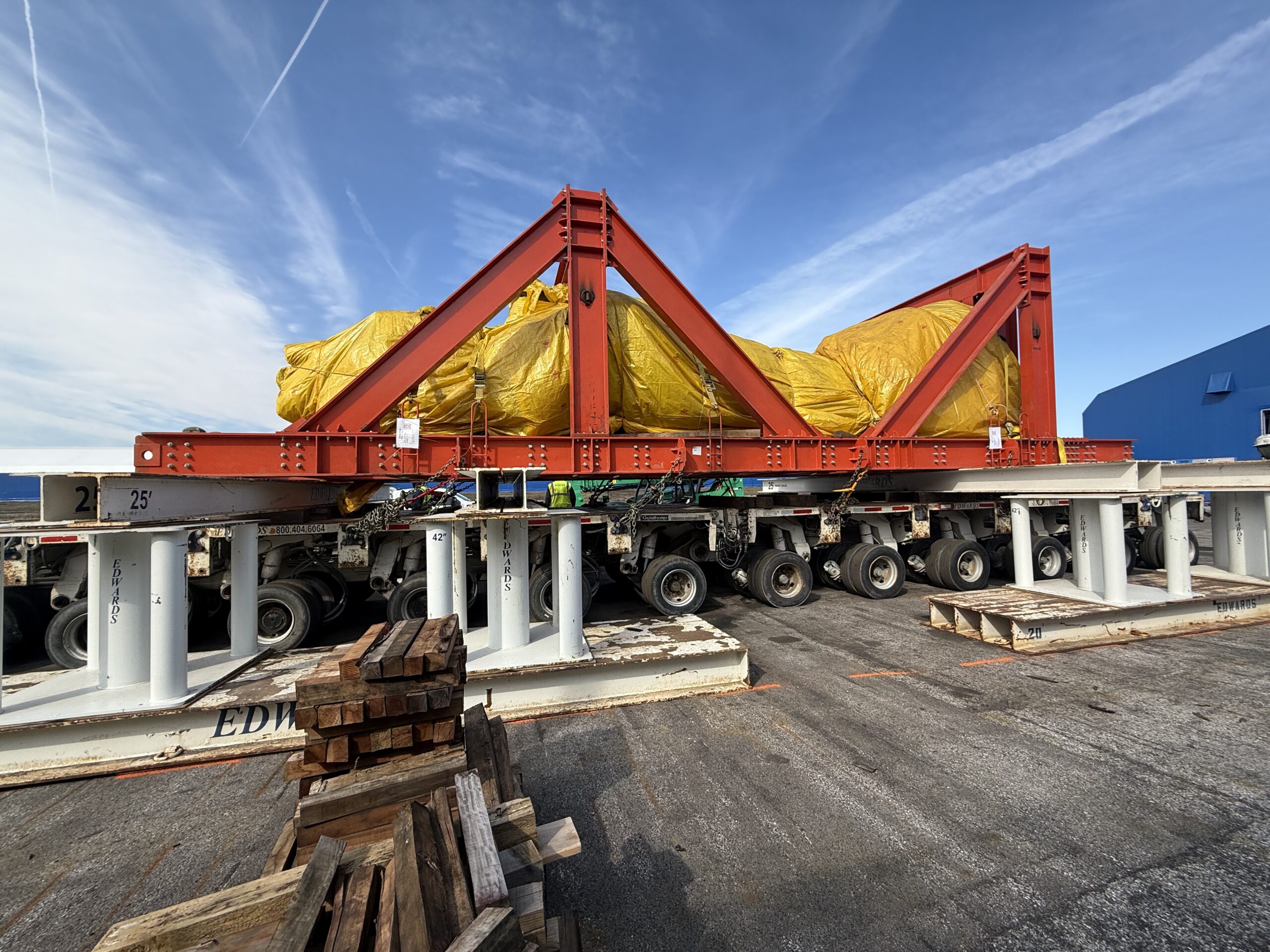
Moving oversized cargo is never just about finding a truck. When the heavy haul shipment involves a 36-foot, 200-metric-ton Hanuman statue traveling from Chennai, India to Ijamsville, Maryland, every single detail matters – from carrier selection and customs coordination to bridge analysis, route permits, port staging, traffic control, and final site placement. For shippers handling heavy haul or project cargo, one delay in permitting, one failed bridge review, or one missing route approval can quickly turn into a costly operational crisis. When the cargo is already on the water and the vessel is three days from port, there is no slow-burn solution. Every hour counts.
That is exactly what made this project a true test of planning, adaptability, and real-time logistics coordination.
In this case study, we take you inside how S&S Brokerage Inc. coordinated the successful movement of a 440,000-pound superload from the Port of Baltimore to its final temple site in Ijamsville, Maryland. Across more than five months of execution, the project survived repeated route failures, permit denials, bridge engineering overhauls, a port staging crisis, and a final delivery deadline tied to a major religious inauguration ceremony.
The statue arrived on time. Here is how it happened.
Section 1: The Project at a Glance
This heavy haul shipment was unlike anything in a standard freight catalog. Here are the core facts:
- Origin: Chennai, India
- Port of Discharge: Baltimore, USA (Canton Maritime Terminal)
- Destination: Ijamsville, Maryland (Temple site)
- Final Inland Distance: 83 miles
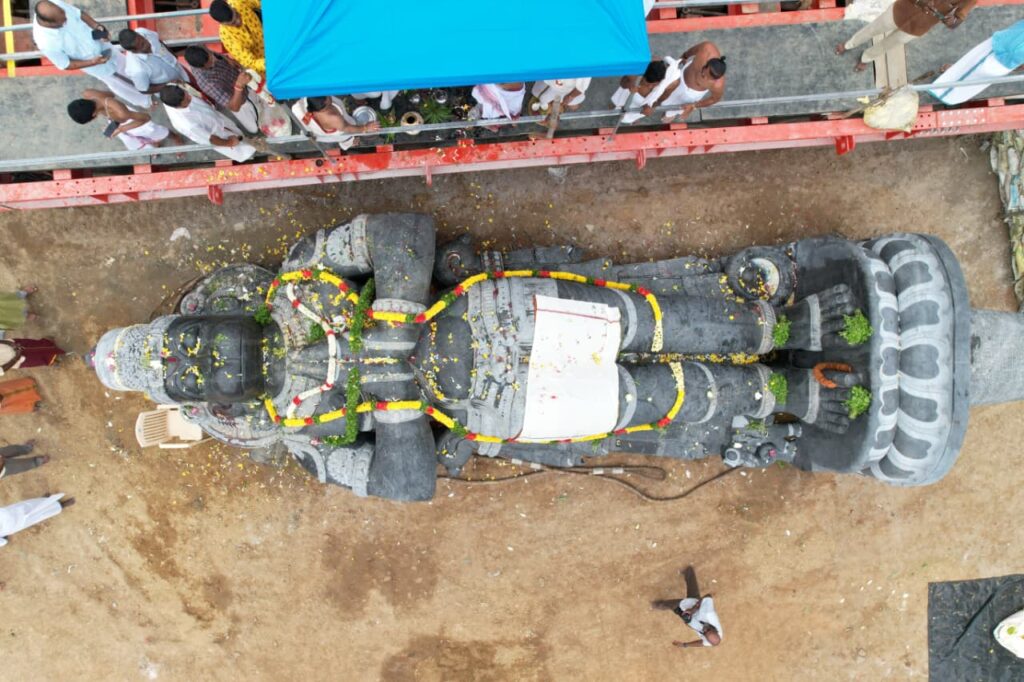
- Cargo: 36-foot Hanuman statue
- Payload Weight: approximately 200 metric tons (440,924 pounds)
- Total Combined Transport Weight: approximately 706,598 pounds gross vehicle weight
- Execution Period: October 2025 to April 2026
- Project Scope: Carrier selection, route survey, engineering validation, state and city permit coordination, customs filing, port staging, traffic control planning, and final site placement
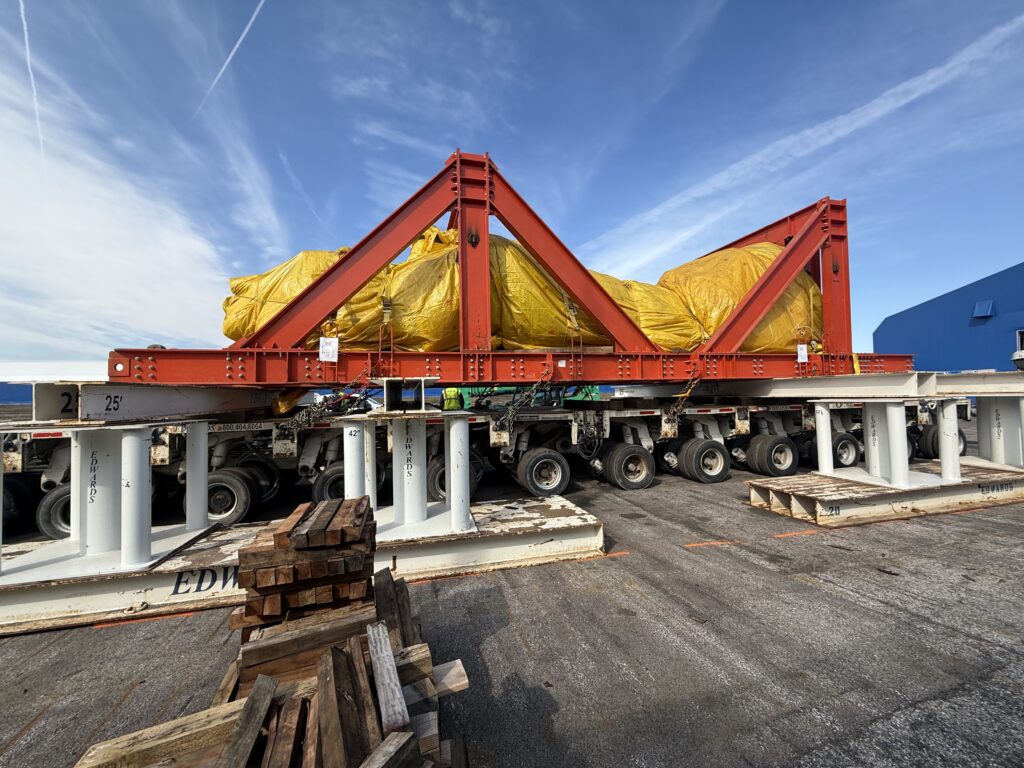
The statue was carved from granite in Chennai and mounted inside a custom-engineered steel transport frame. The frame itself weighed approximately 20.5 metric tons. Combined with packing materials, the total shipment reached 190 metric tons actual, approximately 200 metric tons for transport planning purposes.
This was not a freight move. It was a fully integrated execution project.
Section 2: Why This Was Not a Standard Freight Move
Most freight moves, even complex ones, follow a relatively predictable sequence. You identify the cargo, select equipment, obtain permits, dispatch, and deliver. The variables are manageable.
A 200-metric-ton superload does not work that way.
At this weight and size, every bridge on the proposed route must pass a formal structural analysis before a permit is issued. The analysis is not a quick check – it is an engineering review that measures whether that specific bridge can sustain the calculated load per axle line under a defined trailer configuration. If the bridge fails the analysis, the route fails with it.
On a route covering 83 miles through Baltimore city streets and Maryland state roads, the number of bridges that required review ran into the dozens. And passing one review does not guarantee the next will be clear. Any change in trailer configuration – adding axles, widening the layout, shifting the dolly arrangement – means re-engineering the load distribution and resubmitting every affected bridge for analysis.
Beyond bridge review, a cargo at this weight qualifies as a superload under federal and state regulations. That classification triggers requirements for state police weighing, traffic control plans, escort vehicles, night-only movement windows, and in some cases direct coordination with multiple state and city jurisdictions simultaneously.
The S&S Brokerage team knew from the beginning that this project would require continuous engineering adaptation. What they could not fully anticipate was just how many times the route and trailer configuration would need to be rebuilt from scratch.
Section 3: Early Planning and Carrier Selection
S&S Brokerage took on this project in October 2025, beginning with one of the most critical and underappreciated steps in any heavy haul shipment: finding the right carrier.
For a 200-metric-ton superload, carrier selection is not a rate comparison exercise. The carrier must have the physical equipment capable of handling the load, the engineering team to design the trailer configuration and submit permit drawings, and insurance coverage sufficient for a cargo of this value and risk level. S&S required a minimum of $10 million in cargo insurance coverage as a baseline for even considering a carrier.
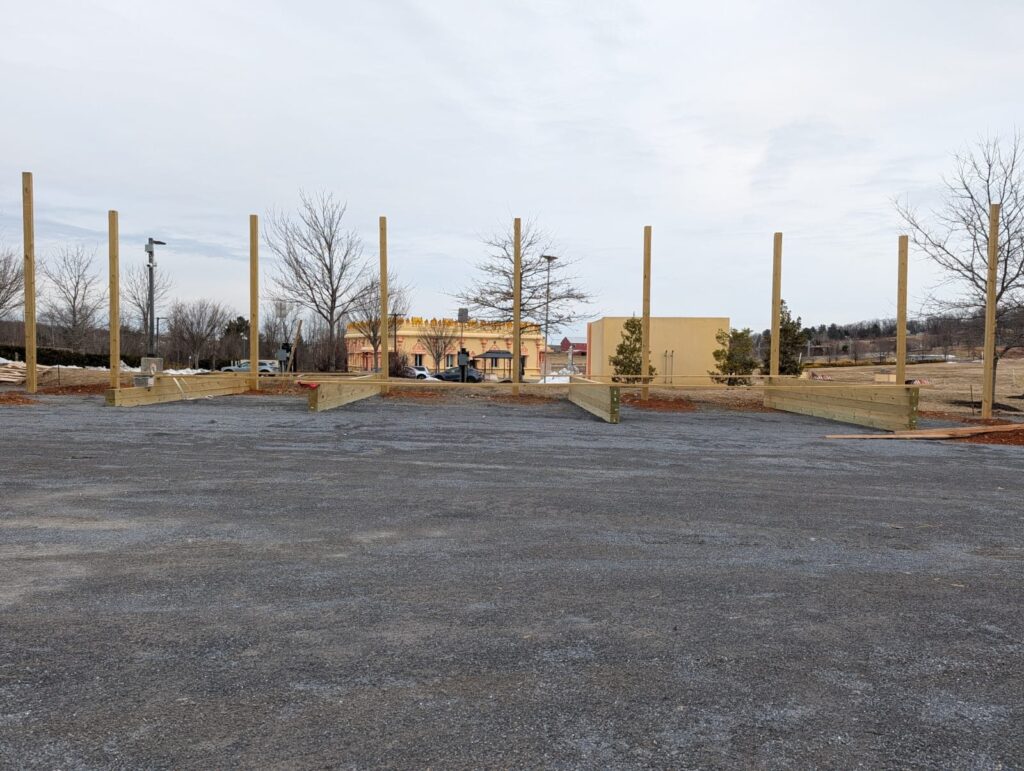
After extensive research, S&S Brokerage awarded the transport contract to Edwards Moving and Rigging, a specialized heavy haul carrier with the equipment capacity and engineering infrastructure required for a project of this complexity. With the carrier in place, the S&S team made an early site visit to Ijamsville, Maryland, meeting with the temple leadership to review the delivery location, confirm the access route onto the temple grounds, and assess ground bearing requirements for the final placement area. The carrier’s team noted that the hall path leading to the placement site was 12 feet wide, and the temple was advised to reinforce the path with additional rock fill to support the movement of the transport assembly.
The temple was also advised to construct a receiving platform approximately 18 to 22 inches above ground level, built to hold 200 metric tons, so the statue could be lowered and set into its permanent position using the jack and slide method at the final destination.
Simultaneously, the initial route survey was completed from the Port of Baltimore to the temple site in Ijamsville. The route covered 83 miles, predominantly via interstate and state highway, and the carrier submitted its first permit application to the Maryland Department of Transportation on October 31, 2025.
The statue was loaded in Chennai on November 4, 2025. The ocean leg had begun. The clock was running.
Section 4: Shipment Movement from India to Baltimore
S&S Brokerage did not manage the ocean leg of this project – that was handled separately by the client’s overseas team. However, once the vessel departed Chennai, S&S was already deep into the inland planning and permit work that would need to be resolved before the cargo arrived on U.S. shores.
The ship carrying the statue traveled via the Far East before heading west toward the U.S. East Coast. Initial estimates placed vessel arrival in Baltimore in December 2025. Those estimates shifted as the vessel encountered schedule changes, eventually pushing the expected arrival to early March 2026 and then finally to the evening of March 13, 2026.
Every vessel delay, while frustrating, bought the team additional planning time – time that turned out to be desperately needed given the permit challenges that continued to stack up throughout the fall and winter months.
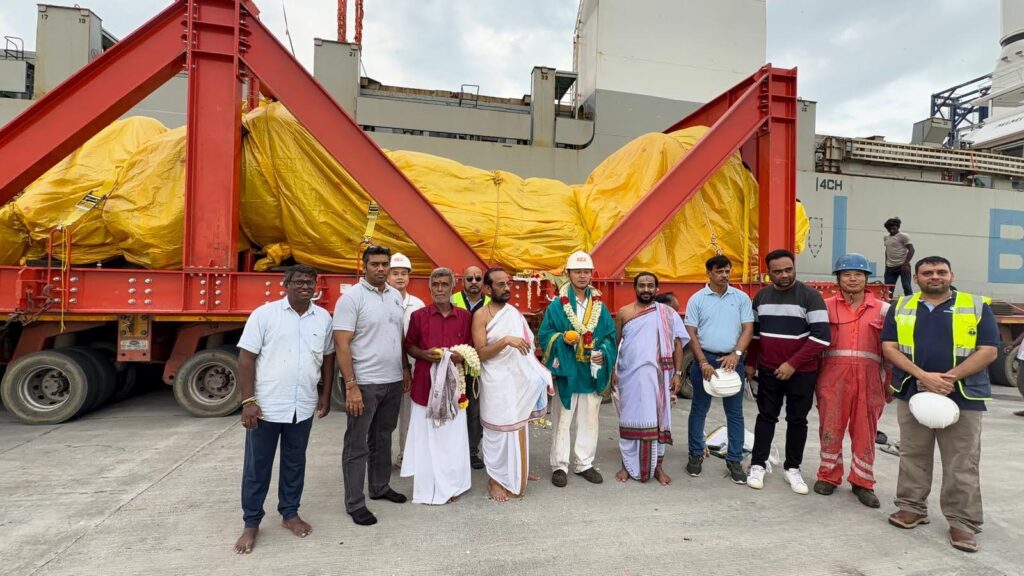
S&S Brokerage coordinated access credentials for the Canton Maritime Terminal in Baltimore ahead of the arrival. This required submitting photo identification for port personnel and obtaining the necessary clearances to be present at the dock when the cargo was offloaded. The team confirmed that all visitors would need PPE including closed-toed shoes, reflective vests, eye protection, and hard hats.
Customs filing was handled through S&S Brokerage’s in-house customs broker, ensuring that the documentation was in order for a clean release upon arrival.
Section 5: The First Major Challenge: Route and Permit Failures
The permit process for this heavy haul shipment began immediately after the carrier completed the initial route survey in October 2025. What followed over the next four-plus months was one of the most complex permitting journeys any project cargo shipment can face.
November 11, 2025: Initial Route Submission Fails
The first permit submission came back with a failure on November 11, 2025. Maryland DOT identified bridges on the proposed route that did not pass structural analysis under the submitted 15-axle trailer configuration. The carrier was directed to either identify an alternate route or modify the trailer setup to redistribute the axle loads across a wider footprint.
November 25, 2025: Denial on Dual-Lane Requirement
After reworking the route, the team resubmitted with a revised configuration. The Maryland Transportation Authority denied this submission as well. The state indicated that the load would require a dual-lane trailer arrangement rather than a single-lane configuration. This was a significant engineering change – not just a paperwork adjustment, but a physical redesign of the transport assembly.
The carrier drafted the load on a dual-lane system and resubmitted.
December 29, 2025: Conditional Approval with Sharply Increased Cost
By late December, a conditional approval was finally issued – but it came with new operational requirements that added significant cost to the project. Maryland DOT required:
- Night movement only to minimize traffic disruption
- Light towers to illuminate the load and trailer during movement
- Addition of mud mats at specific locations along the route
- An upgrade from an 18-axle to a 14-axle dual-lane trailer configuration
- Addition of a second pull truck
These requirements added approximately $32,000 in additional cost to the original transport estimate and pushed the gross cost well above original projections. The project was still moving – but the commercial picture was changing materially.
When the Route Failed Again: The Crisis Phase
The most severe permit challenge came in early March 2026 – with the vessel now days from Baltimore.
During a routine check of the permit as it moved through the approval process, it was discovered that a 10-mile stretch of the route coming off the port onto I-695 had never been submitted to the bridge department. Maryland DOT acknowledged this was an internal oversight. The bridges on that stretch had simply never been reviewed. When the bridge department finally ran the analysis on that corridor, four bridges failed.
Two of those bridges scored 0.95 and 0.75 on a 1.0 pass/fail scale. The others were similarly marginal.
This was not a planning failure by the logistics team. It was a regulatory error – the state had issued an approval without completing its own internal bridge review process. But regardless of who made the mistake, the cargo was on the water and arriving in five days. The team had no approved route to move it inland.
Pallavi Ghosh and Sheetal Shah from the S&S Brokerage team describe this phase plainly: the news was shocking, the pressure was enormous, and the only path forward was to start working immediately. There was no time for anything else.
Section 6: Engineering Complexity and Equipment Changes
Engineering the Move: Axles, Dollies, Bridge Reviews, and Load Distribution
At the heart of every permit denial was the same underlying problem: how do you move 440,000 pounds across bridges that were not engineered to carry that kind of concentrated load?
The answer is load distribution. By spreading the total weight across more contact points – more axles, wider trailer spans, additional dolly units – the load per axle line decreases. If you can bring the load per axle below a bridge’s rated capacity, the bridge passes analysis and the permit advances.
The initial trailer configuration for this project used a 15-axle setup. When that failed bridge analysis, the engineering team shifted to a dual-lane system – effectively two parallel trailer files working together to spread the load over a wider footprint.
When additional bridges failed under that configuration, the solution required adding dollies to the trailing end of the transport assembly. The final configuration used 18 axle lines across 2 files with 8 additional dollies, creating a transport assembly that spread load per tire down to approximately 4,812 pounds – a level that could pass most bridge ratings on the rerouted path.
The permit application drawing, prepared by Edwards Moving and Rigging’s engineering team, documented a total assembly with:
- 440,925 pounds payload
- 155,141 pounds trailer weight
- 27,978 pounds dolly weight
- Total load of approximately 621,605 pounds on the transport assembly
- Gross vehicle weight of 706,598 pounds
For specific bridges that still could not support even the distributed dolly configuration, the engineering solution was culvert mitigation – laying heavy steel plates across road culverts and using bridge jumpers to spread the load over a longer span at those specific crossing points.
The route mitigation plan for the final movement required:
- Jumping and plating multiple culverts along the route
- Laying steel plates at four different culvert crossings in two separate activity windows
- Using 30-foot jumpers at specific culvert locations
- Deploying 14 mud mats, 8 x 10 steel plates, wooden wedges, and specialized rigging equipment
The total equipment list for route mitigation alone included 3 jumpers, 8 dollies with dolly beams, 14 mud mats, 6 wooden wedges, 8 steel plates, 1 double-drop truck, and 2 forklifts – in addition to a 6-man transport crew, a 5-man bridge jump crew, 1 prime mover driver, and 3 truck drivers.
This was not a freight delivery. It was a small-scale civil engineering operation executed alongside a live road movement.
Section 7: The Critical Turning Point Near Cargo Arrival
On March 12, 2026 – two days before the vessel was scheduled to arrive at Canton Maritime Terminal – the existing route permit application was denied again.
The timing could not have been worse. The team had a pre-approval communication suggesting the permit was moving forward. The formal denial came the following day. Maryland DOT acknowledged in writing that this denial was partially their error – they had previously approved a routing without completing bridge analysis on a key corridor. The team now had to resubmit two separate trailer configuration options simultaneously while the vessel was hours from docking.
The decision was made to discharge the cargo and stage it at the port rather than leave it on the vessel while the permit situation was resolved. This was the right operational call, but it came with significant cost implications. Port storage fees for a 440,000-pound superload are substantial – an initial $2,500 fee plus $6,000 per month in storage, with escalating charges beyond 10 days.
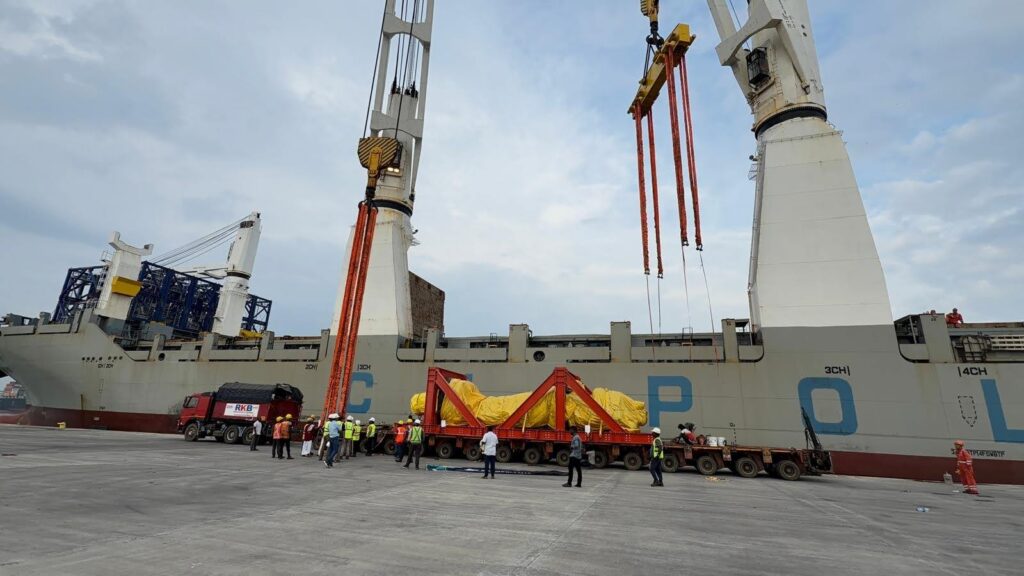
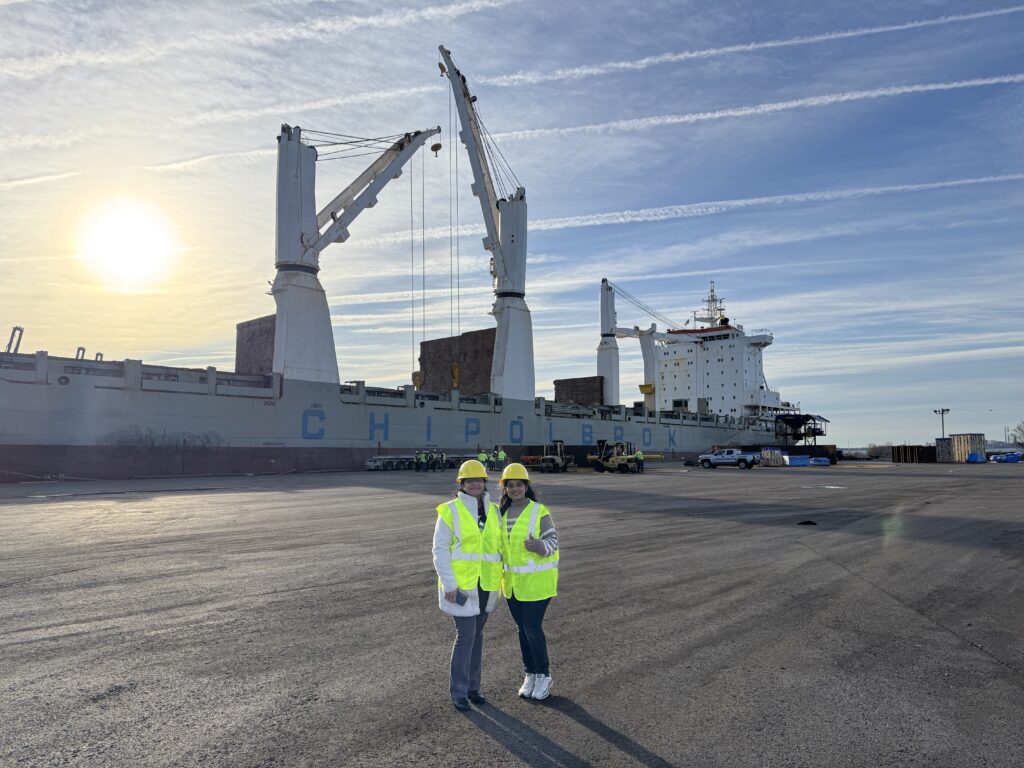
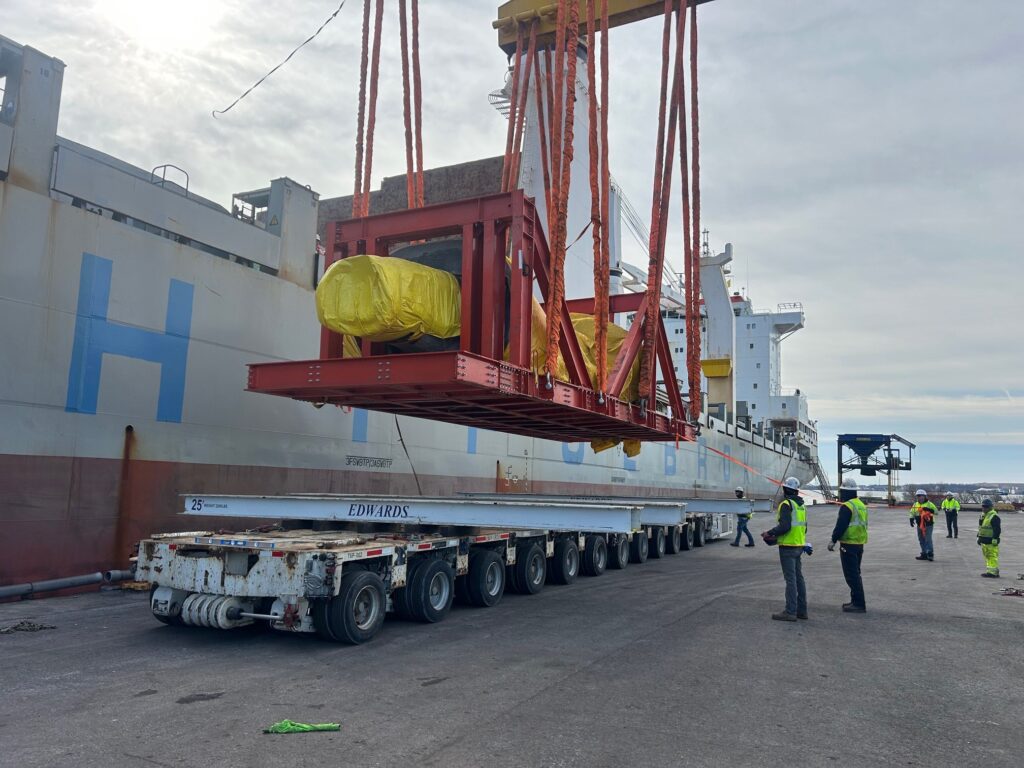
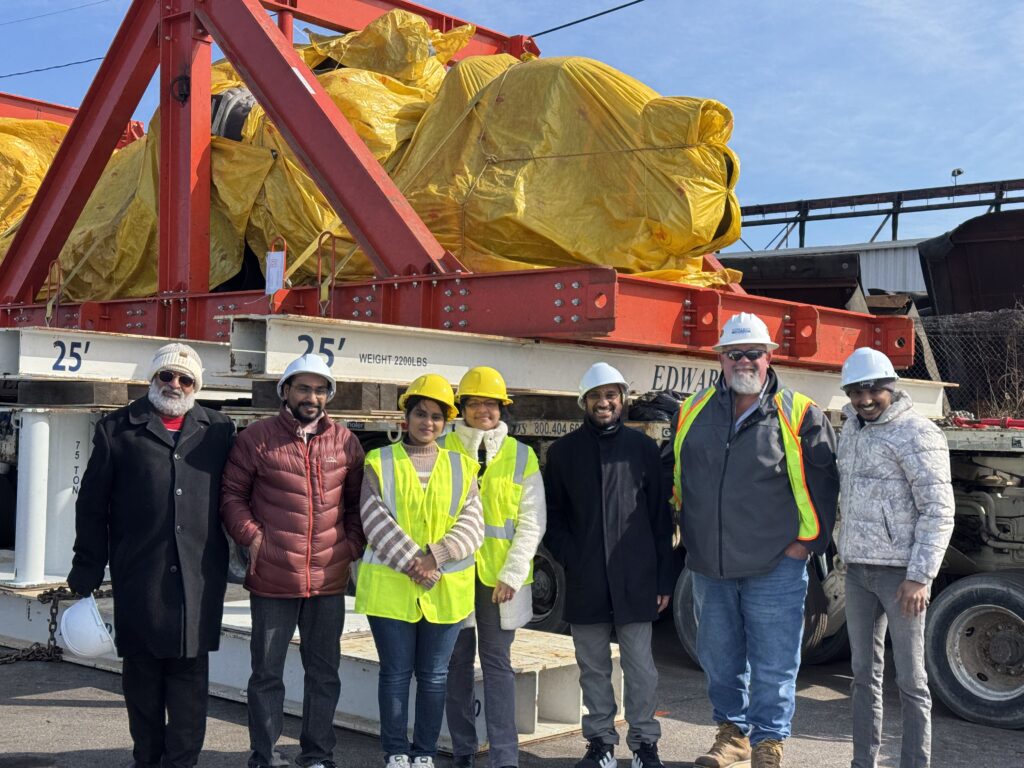
Pallavi Ghosh and Sheetal Shah from S&S Brokerage were physically present at the Canton Maritime Terminal on the morning of March 14, 2026, in hard hats and reflective vests, overseeing the offloading of the statue from the vessel onto the transport trailer at the dock. The cargo was then moved to the staging area at the port while permit work continued.
The statue was also scanned and cleared by U.S. Customs at the port during this period, removing that element from the remaining open items.
With the statue on the ground at the port and the clock running on storage costs, the team went into daily meetings with Maryland DOT, the City of Baltimore, the carrier’s engineering team, and the temple leadership to drive the permit process forward. The temple’s leadership had also reached out to the Governor’s office and state senators to request assistance in accelerating the approval timeline.
Section 8: Port Staging Strategy at Baltimore
The decision to stage the cargo at the port rather than keep it on the vessel was a calculated trade-off.
Leaving the cargo on the vessel while permits were resolved would have risked vessel delay fees – costs that, on a specialized cargo vessel, can run tens of thousands of dollars per day and are entirely outside the logistics team’s control. By discharging the statue and staging it at Canton Terminal, the team retained control of the cargo and removed vessel detention risk from the equation.
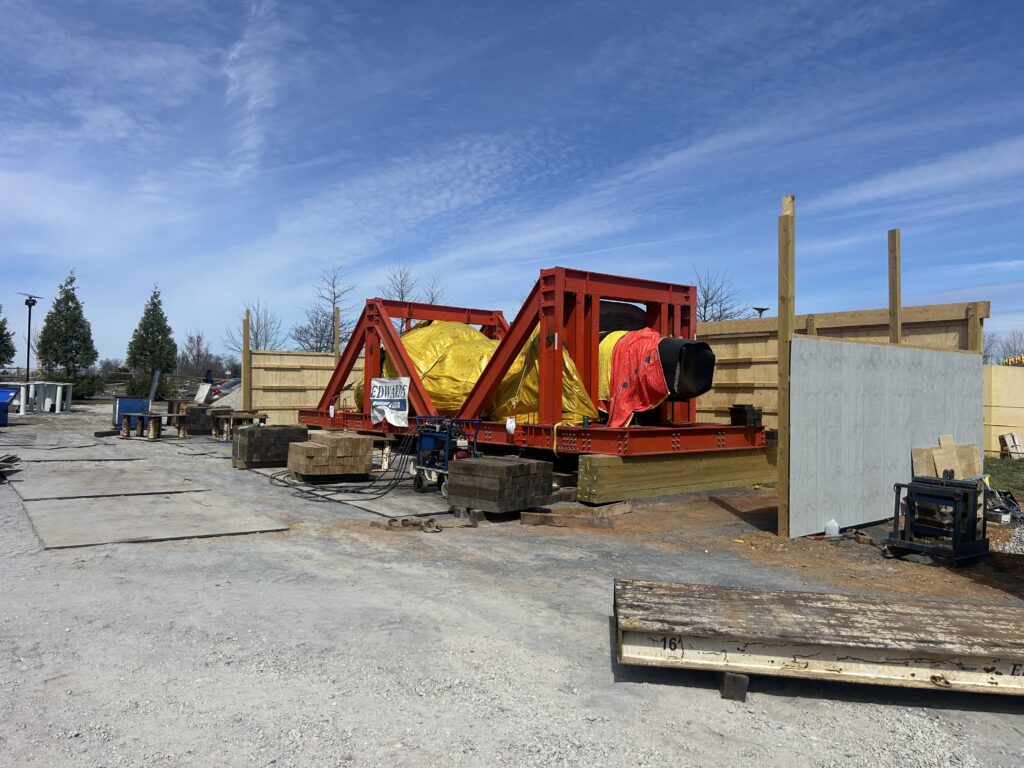
The staging arrangement required the statue to be transferred from the vessel to a transport trailer at the dock, then moved to a designated holding area within the port facility. The trailer was positioned on stands and the statue was secured in its staging configuration with the dolly beams attached to the Goldhofer transport system.
This staging window served a second purpose: it allowed the carrier’s crew to complete the trailer loading process properly under controlled conditions, with state police present to conduct the official weight verification before the road move began. The weigh-in confirmed the cargo at just under the originally projected weight – a finding that actually helped slightly in the final bridge analysis calculations.
Section 9: Daily Coordination Across Stakeholders
One of the most demanding aspects of this project was the volume and frequency of coordination required across parties who each had their own timelines, priorities, and constraints.
The active stakeholder group throughout the execution phase included:
- S&S Brokerage (end-to-end coordination and client management)
- Edwards Moving and Rigging (carrier, engineering, and execution)
- Maryland Department of Transportation (state route permits)
- City of Baltimore (city route permits and traffic control approval)
- Sunrise Safety (traffic control plan preparation and submission)
- Maryland State Police (load weighing and road escort)
- Canton Maritime Terminal (port discharge and staging)
- U.S. Customs (cargo scan and clearance)
- Temple leadership (delivery deadline, site readiness, and platform construction)
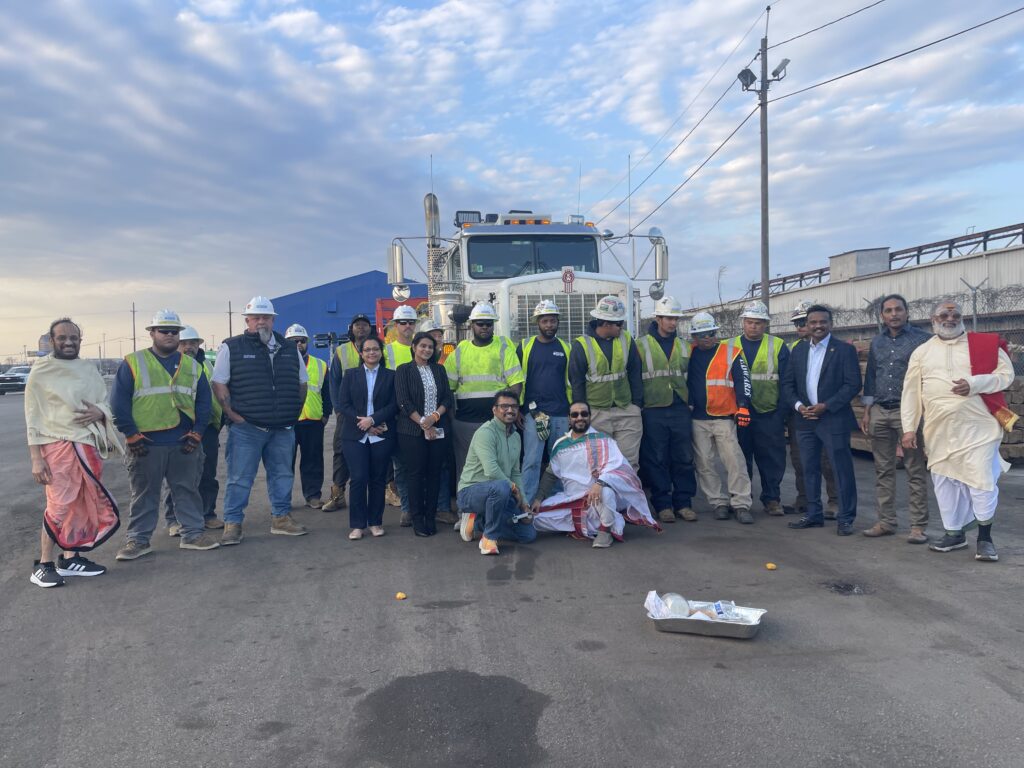
At the peak of the crisis phase in mid-March 2026, the S&S team was in daily meetings – and often multiple meetings per day – across this entire group. The temple’s priest and leadership team were directly engaged with state officials. The carrier’s engineers were submitting revised permit drawings and responding to bridge department feedback in real time.
Sheetal Shah and Pallavi Ghosh served as the central coordination point across all of these parties simultaneously, translating carrier engineering updates into client-facing communication, pushing permit offices for priority review, and managing the commercial conversations that came with every additional cost increase.
This kind of daily multi-stakeholder coordination is what separates a logistics coordinator from a logistics partner. Anyone can book a truck. Managing a project through seven months of engineering changes, permit failures, cost overruns, and deadline pressure requires a different level of commitment.
Section 10: Traffic Control and Final Movement
On March 23, 2026, the carrier began mobilizing crew and equipment to Baltimore. The seed permit – the critical state approval enabling final movement planning – was received on March 24 at 9:32 a.m. The Traffic Control Plan was submitted by 11:30 a.m. on March 25. District 3 approval came in on the afternoon of March 25, clearing the transport for departure Thursday night.
The final movement plan called for two consecutive night moves. Night-only movement was required by Maryland DOT to minimize traffic disruption on public roads. The route was planned in segments:
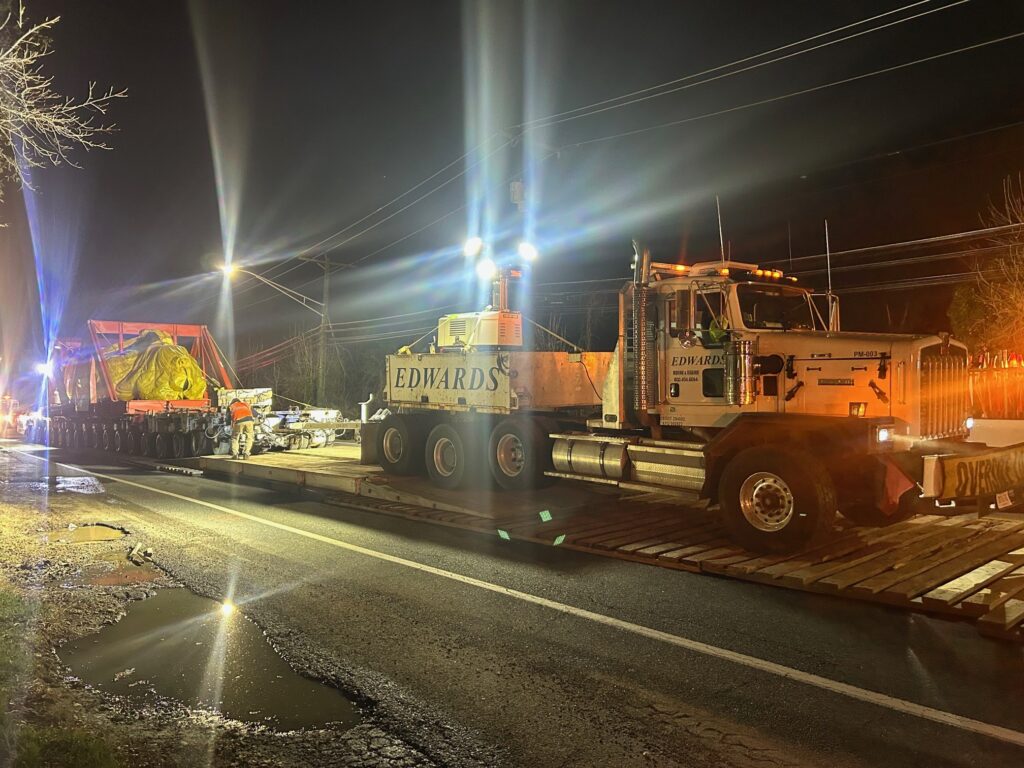
Night One: Move the statue from the Canton Maritime Terminal staging area through the city of Baltimore, covering approximately 15 miles to an overnight truck stop. This segment required crossing four bridges using the full dolly configuration, jumping one 12-foot wide culvert, and laying steel plates over a separate culvert.
Night Two: Complete the remaining 68-mile run from the truck stop to the temple site in Ijamsville.
On the evening of March 26, Pallavi Ghosh and Sheetal Shah arrived at the Canton Maritime Terminal at 5:30 p.m. to walk the first night’s route alongside the crew in preparation for the move. By that point the trailer was fully loaded and secured, the dolly beams were installed on the Goldhofer system, state police had completed the official weigh-in, and the transport crew was staged and ready.
The Night One move progressed through Baltimore’s streets under police escort and traffic control, with jumper crews working ahead of the main transport to plate culverts and set jumpers at each crossing point as the convoy advanced. Wooden boards were laid along sections of the route where road surface conditions required protection from the trailer’s load.
By early morning on March 28, 2026, at approximately 1:30 a.m., the statue arrived at the temple site in Ijamsville, Maryland. Transport phase complete.
Section 11: Final Placement and Temple Recognition
When the statue arrived at the temple grounds, the carrier crew began the final jack and slide operation to move the statue from the transport trailer onto the permanent receiving platform that the temple had constructed. This final phase required precise positioning of the jack points – seven lifting hook and jack hook locations engineered into the transport frame by the fabrication team in Chennai – to lift and slide the statue from the Goldhofer trailer system onto the stone platform foundation. The platform had been built to a specific height and load bearing specification that S&S Brokerage and the carrier had reviewed and approved months earlier during the initial site survey.
Placement activities continued through March 28 and into the following days.
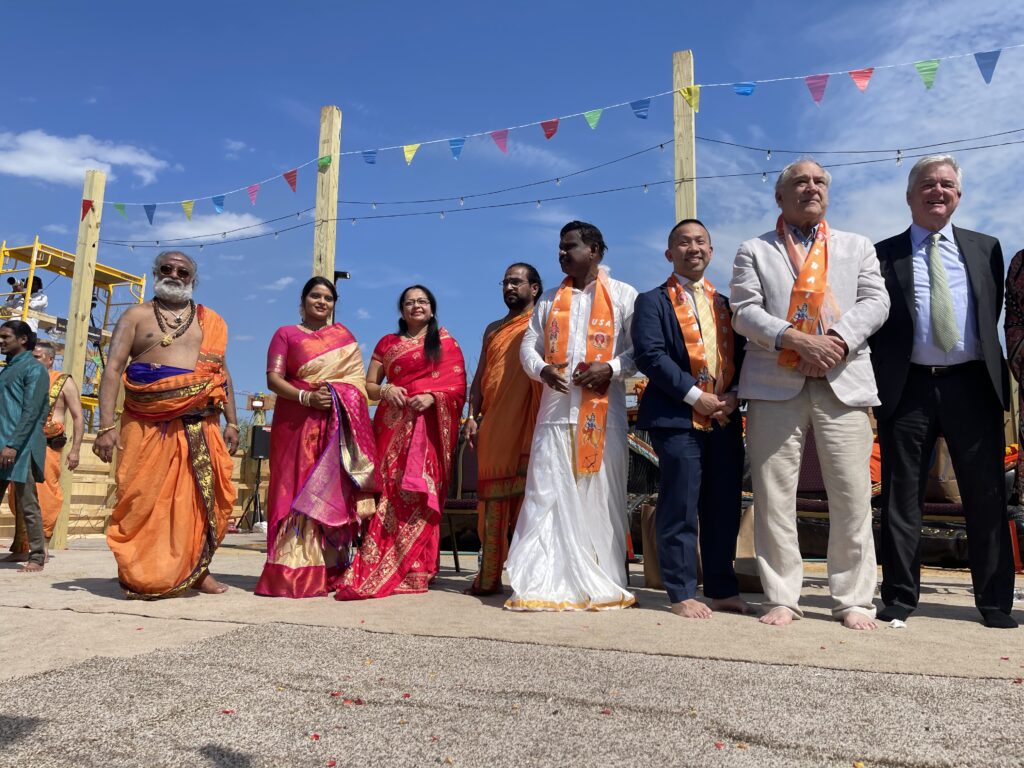
On April 4, 2026, the temple held its inauguration ceremony, attended by state senators and other prominent figures. The delivery had been completed before the deadline. The statue was in place. At the ceremony, temple leadership formally recognized Pallavi Ghosh and Sheetal Shah from S&S Brokerage for their exceptional coordination, on-ground involvement, and project support throughout the entire execution period. Both had personally attended site visits, port operations, and route walks across the full arc of the project.
It was a recognition that reflected something real: behind every successful heavy haul project is a team that refused to let the obstacles win.
Section 12: What This Heavy Haul Project Teaches Shippers
Every project cargo and heavy haul shipper can draw practical lessons from this execution. These are not theoretical observations – they came from more than five months of real-world problem solving under significant schedule and cost pressure.
Expect the permit process to take longer and cost more than the initial plan.
Permit timelines for superloads are inherently unpredictable. Bridge analyses can fail, new routes require new surveys, and state agencies operate on their own review cycles. Build contingency time and contingency budget into every project cargo plan.
The route is not confirmed until every bridge has been analyzed.
A route survey tells you where the truck can physically go. It does not tell you where the truck is permitted to go. Bridge analysis is the gating factor, and a route that looks clean on a map can fail multiple times at the engineering review stage. Never communicate a delivery date to stakeholders based on a route that has not cleared bridge review.
Equipment configuration may change multiple times.
The trailer configuration you plan in month one may look nothing like the configuration you execute in month five. Engineering requirements driven by bridge ratings, road conditions, and permit office feedback can require fundamental changes to the transport assembly. Work with a carrier whose engineering team can adapt quickly.
Port staging is a legitimate contingency decision.
When cargo is arriving and the inland route is not yet cleared, staging at the port is often the right call – even with its cost implications. The alternative, leaving cargo on the vessel, carries its own risks and costs that can quickly exceed staging fees. Plan for this contingency before the vessel departs origin.
Daily coordination is not optional on project cargo.
A heavy haul project with multiple active stakeholders requires someone in the coordination seat every day. Not every few days – every day. Issues that go unaddressed for 48 hours on a project this complex can become multi-week delays.
Budget for overruns.
This project saw costs increase by over $100,000 from the original estimate, driven by engineering redesign, permit delays, port staging fees, specialized equipment changes, and additional crew mobilization. These cost increases were not the result of poor planning – they were the result of a complex regulatory environment and an unusually challenging bridge corridor. Shippers planning project cargo moves should treat the initial estimate as a starting point, not a ceiling.
Section 13: How S&S Brokerage Supports Heavy Haul and Project Cargo
S&S Brokerage Inc. is a New Jersey-based logistics company with operations across 48 states and over 20 years of combined industry experience. The Hanuman statue project represents the kind of complex, high-stakes execution that the team is built for.
What the S&S team brings to heavy haul and project cargo is not just carrier access. It is the capacity to manage a fully integrated project from start to finish – across engineering, permitting, customs, stakeholder communication, port operations, and final execution – with the persistence to keep the project moving when setbacks occur.
On the Hanuman statue project, that meant:
- Identifying and qualifying a specialized heavy haul carrier capable of a 440,000-pound superload move with $10 million in insurance coverage
- Conducting an in-person site survey at the destination temple in Ijamsville
- Filing and managing multiple rounds of permit submissions across Maryland state and Baltimore city authorities
- Managing in-house customs filing through the company’s customs broker division
- Personally attending port operations at Canton Maritime Terminal for the arrival and offloading
- Coordinating daily multi-party meetings during the crisis phase of the project
- Walking the full night route in person before the move executed
- Delivering the statue to the temple site on March 28, 2026, ahead of the April 4 inauguration ceremony
If you are planning a heavy haul shipment, project cargo move, or any specialized transportation that requires more than a standard freight approach, S&S Brokerage is the right partner to have in your corner.
Actionable Tips for Shippers Planning Heavy Haul or Project Cargo Moves
Start the permit process as early as possible. Superload permits in states like Maryland can take weeks to process under normal conditions. When bridge analysis failures require route redesign and resubmission, that timeline extends significantly. Start the moment you know the move is coming.
Conduct an in-person site survey before finalizing anything. Route surveys on paper and site visits in person are different exercises. Walking the actual path from port to destination reveals access constraints, road width limitations, turning radius issues, and ground bearing conditions that no map captures.
Work with a carrier whose engineers are available to adapt. A carrier that submits one permit drawing and waits is not equipped for complex project cargo. You need a carrier whose engineering team can turn around revised drawings and resubmit within 24 to 48 hours when the state comes back with new requirements.
Prepare the delivery site in advance. The receiving platform, access road, and staging area must be ready before the cargo arrives. Any site deficiencies discovered when the truck is at the gate create expensive delays. S&S coordinated with the temple months in advance on platform height, bearing capacity, and access path reinforcement.
Build stakeholder communication into the project structure. Everyone connected to this project – the client, the carrier, the permit authorities, the destination site – needed to be on the same page at all times. A single weekly update call is not enough for a live project cargo move. Establish daily touchpoints during the execution phase.
Have contingency plans for port staging, alternate routes, and equipment substitution before you need them. This project required all three. The teams that managed it successfully were the ones who could pivot within hours, not days.
Conclusion
The movement of a 36-foot, 200-metric-ton Hanuman statue from Chennai, India to a temple in Ijamsville, Maryland was one of the most complex heavy haul shipments executed on the U.S. East Coast in recent years. It required five months of active coordination, multiple engineering overhauls, repeated permit resubmissions, a port staging operation, two consecutive night moves across Baltimore, and an on-the-ground team that refused to let any single setback end the project.
The statue arrived at the temple on March 28, 2026. Placement was completed. The inauguration ceremony took place on April 4 as planned.
For shippers who need a logistics partner capable of handling complexity at this level, S&S Brokerage Inc. has demonstrated what that looks like.
Get a quote today and let us show you what end-to-end project cargo management means in practice.
Frequently Asked Questions
Q1: What is a heavy haul shipment?
A: A heavy haul shipment involves cargo that exceeds standard legal weight or dimension limits for road transport and requires specialized equipment, permits, and engineering to move safely. In the U.S., cargo exceeding 80,000 pounds gross vehicle weight or certain dimensional limits is considered oversize or overweight and must be permitted. Superloads – loads significantly exceeding those thresholds – require state-by-state engineering review and traffic control coordination.
Q2: What permits are required for heavy haul transportation in the USA?
A: Heavy haul permits vary by state and are typically required from each state highway authority the load will travel through. For superloads, permits require submission of engineering drawings showing the trailer configuration, axle loads, and load distribution. State bridge engineers review each bridge on the proposed route to confirm it can sustain the load. Additional requirements may include traffic control plans, state police escorts, night-only movement windows, and weight verification by state police.
Q3: Why do heavy haul permits get denied so often?
A: The most common reason for heavy haul permit denial is bridge analysis failure. Even a well-planned route may have one or more bridges that cannot support the calculated axle loads under the proposed trailer configuration. When a bridge fails analysis, the team must either redesign the trailer configuration to redistribute the load or identify an alternate route that avoids the problematic structure. Complex routes with multiple bridges can require several rounds of analysis and redesign before an approvable configuration is identified.
Q4: What is port staging for heavy haul cargo?
A: Port staging refers to the decision to discharge cargo from a vessel and hold it in a secure area at the port while inland logistics – such as permits or equipment assembly – are finalized. For heavy haul shipments, staging at the port avoids vessel detention charges and keeps the cargo accessible for loading and inspection. Staging fees vary by port and cargo size but are generally preferable to the unpredictability of vessel demurrage.
Q5: What is the jack and slide method used in heavy haul placement?
A: The jack and slide method is a precision placement technique used for extremely heavy objects that cannot be lowered directly into their final position from a crane or trailer. Hydraulic jacks lift the cargo incrementally off the transport assembly, and it is then slid horizontally along a controlled track system into its exact final position. It is commonly used for large industrial equipment, monument installations, and heavy structures that require precise final alignment.
Q6: How long does a complex heavy haul project take from start to finish?
A: Timeline varies significantly based on cargo weight, route complexity, and permit jurisdiction. Short-haul domestic superloads on well-traveled routes may take two to six weeks from permit submission to delivery. International project cargo involving customs coordination, ocean freight, and multi-state permits – as in the Hanuman statue project – can take five or more months. Starting the planning and permitting process as early as possible is the single most effective way to manage timeline risk.
Q7: How do I find a reliable heavy haul carrier and broker in the USA?
A: Look for a freight broker with demonstrated project cargo experience and direct relationships with specialized carriers who hold the equipment capacity, engineering capability, and insurance coverage your project requires. Ask specifically about prior experience on loads of similar weight, routes through the same state jurisdictions, and whether the broker’s team will be actively involved throughout the execution phase – not just at booking. For complex projects, the broker’s coordination role is often as important as the carrier’s operational role.